1
Country: USA | Funding: $1.7B
X-energy produces the Xe-100 - small modular nuclear reactor. It is a fourth-generation, 80-megawatt high-temperature gas-cooled reactor (HTGR), boasting (according to the company) high stability, efficiency, reliability and safety. The reactor can be scaled into 4-pack power plant thanks to its modular design. Its construction maximizes the use of off-the-shelf components, that can be delivered to the site using existing road and rail routes. The reactor does not rely on any active systems, electrical power or human intervention for safety, i.e. it shuts down and dissipates heat passively (as a result of the low power density). X-energy also produces TRISO-X fuel, which can withstand extreme temperatures. The company also aims to produce power systems for lunar bases.
X-energy produces the Xe-100 - small modular nuclear reactor. It is a fourth-generation, 80-megawatt high-temperature gas-cooled reactor (HTGR), boasting (according to the company) high stability, efficiency, reliability and safety. The reactor can be scaled into 4-pack power plant thanks to its modular design. Its construction maximizes the use of off-the-shelf components, that can be delivered to the site using existing road and rail routes. The reactor does not rely on any active systems, electrical power or human intervention for safety, i.e. it shuts down and dissipates heat passively (as a result of the low power density). X-energy also produces TRISO-X fuel, which can withstand extreme temperatures. The company also aims to produce power systems for lunar bases.
2

Country: USA | Funding: $629M
Kairos Power is developing advanced FHR reactor using granular TRI-Structural ISOtropic (TRISO) fuel in pebble form. The technology uses an efficient and flexible steam cycle to convert heat from fission into electricity. Instead of water, used in traditional nuclear reactors, the Kairos Power reactor uses molten fluoride salts as coolant, which has excellent chemical stability and high heat transfer capacity at high temperatures. The reactor requires no electrical power to remove heat from the core in case of shutdown and there is no need for coolant makeup (since the coolant cannot boil off). The fuel's resistance to extremely high temperatures provides orders of magnitude greater cooling capacity in emergency scenarios compared to water-cooled reactors. The company's goal is to build the Hermes 2 Demonstration Plant (50 MW) by 2030. It also has contract with Google to power its data-centers.
Kairos Power is developing advanced FHR reactor using granular TRI-Structural ISOtropic (TRISO) fuel in pebble form. The technology uses an efficient and flexible steam cycle to convert heat from fission into electricity. Instead of water, used in traditional nuclear reactors, the Kairos Power reactor uses molten fluoride salts as coolant, which has excellent chemical stability and high heat transfer capacity at high temperatures. The reactor requires no electrical power to remove heat from the core in case of shutdown and there is no need for coolant makeup (since the coolant cannot boil off). The fuel's resistance to extremely high temperatures provides orders of magnitude greater cooling capacity in emergency scenarios compared to water-cooled reactors. The company's goal is to build the Hermes 2 Demonstration Plant (50 MW) by 2030. It also has contract with Google to power its data-centers.
3

Country: USA | Funding: $1.8M
Valar Atomics develops small modular nuclear reactors using proven high-temperature gas reactor (HTGR) technology combined with safe TRISO fuel. HTGRs are optimized to produce high-quality process heat which is used for industrial and chemical applications, providing nearby partners with affordable, abundant and clean energy. Using TRISO-coated fuel particles and helium coolant, the HTGRs passively remove decay heat without active systems or operator intervention. This design minimizes the risk of core damage even in severe accident scenarios. The company plans to mass-produce the reactors and deploy them at so-called gigasites, where they will power AI data centers, industrial facilities, and other customers.
Valar Atomics develops small modular nuclear reactors using proven high-temperature gas reactor (HTGR) technology combined with safe TRISO fuel. HTGRs are optimized to produce high-quality process heat which is used for industrial and chemical applications, providing nearby partners with affordable, abundant and clean energy. Using TRISO-coated fuel particles and helium coolant, the HTGRs passively remove decay heat without active systems or operator intervention. This design minimizes the risk of core damage even in severe accident scenarios. The company plans to mass-produce the reactors and deploy them at so-called gigasites, where they will power AI data centers, industrial facilities, and other customers.
4

Country: USA | Funding: $596M
Antares designs and builds microfission reactors for strategic energy applications, including space missions, commercial and military energy resilience. Its R1 microreactor can produce from 100 kilowatts to 1 megawatt and uses TRISO fuel, which consists of uranium spheres coated with carbon and ceramics, embedded in graphite. It's designed to run safely and autonomously for 6+ years without refueling. The company performs high-precision machining of the nuclear graphite in-house, speeding design iterations. The optimized reactor design simplifies deployment with a minimal number of actuators. The control drums, made of graphite and boron carbide, have independent actuators, inspired by the designs of historical space reactors. Antares has a manufacturing facility in California and has already tested the first electrically heated demonstration unit (EDU).
Antares designs and builds microfission reactors for strategic energy applications, including space missions, commercial and military energy resilience. Its R1 microreactor can produce from 100 kilowatts to 1 megawatt and uses TRISO fuel, which consists of uranium spheres coated with carbon and ceramics, embedded in graphite. It's designed to run safely and autonomously for 6+ years without refueling. The company performs high-precision machining of the nuclear graphite in-house, speeding design iterations. The optimized reactor design simplifies deployment with a minimal number of actuators. The control drums, made of graphite and boron carbide, have independent actuators, inspired by the designs of historical space reactors. Antares has a manufacturing facility in California and has already tested the first electrically heated demonstration unit (EDU).
5

Country: USA | Funding: $186.5M
Standard Nuclear produces TRISO nuclear fuel (from uranium), which is independent of reactor type. The TRISO (TRi-structural ISOtropic) fuel concept was first developed in the 1950s. Poppy-seed-sized uranium particles are coated with ceramic and carbon. They are then packed into larger spheres. This fuel pellet design will be more resistant to meltdown. Standard Nuclear’s modular manufacturing architecture is built for flexibility, allowing it to produce diverse fuel designs on a single production line with minimal switching time and cost. Many nuclear energy startups have announced they will use TRISO in their reactors. The company's clients include Radiant Energy and Nano Nuclear Energy.
Standard Nuclear produces TRISO nuclear fuel (from uranium), which is independent of reactor type. The TRISO (TRi-structural ISOtropic) fuel concept was first developed in the 1950s. Poppy-seed-sized uranium particles are coated with ceramic and carbon. They are then packed into larger spheres. This fuel pellet design will be more resistant to meltdown. Standard Nuclear’s modular manufacturing architecture is built for flexibility, allowing it to produce diverse fuel designs on a single production line with minimal switching time and cost. Many nuclear energy startups have announced they will use TRISO in their reactors. The company's clients include Radiant Energy and Nano Nuclear Energy.
6
Country: USA | Funding: $30M
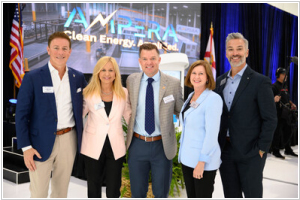
AMPERA develops next-generation subcritical thorium-based microreactor systems for AI data centers, that are energy dense and do not require refueling. Its nuclear module is designed to provide decades of reliable carbon-free power with exceptional energy density, safety, and longevity. The company also plans to process the raw thorium in-house at its facility in Florida and to use its proprietary jetting technology to manufacture high-quality Tri-structural Isotropic (TRISO) fuel kernels.
AMPERA develops next-generation subcritical thorium-based microreactor systems for AI data centers, that are energy dense and do not require refueling. Its nuclear module is designed to provide decades of reliable carbon-free power with exceptional energy density, safety, and longevity. The company also plans to process the raw thorium in-house at its facility in Florida and to use its proprietary jetting technology to manufacture high-quality Tri-structural Isotropic (TRISO) fuel kernels.
7

Country: France | Funding: €19.5M
Otrera is making modern fast neutron reactor (FNR) rethinking its core design decisions to make it simple, safe, and cost-competitive. Its concept is based on a compact, modular loop-type architecture, drawing inspiration from proven LWR principles. It features three alternating reactor vessels: two in operation and one in cooling. This configuration allows for in-vessel fuel cooling, eliminating the need for separate storage pools—a major cost-saving innovation. The project is designed to reduce or even eliminate the traditional limitations of sodium technology and allows to simplify the reactor’s overall architecture, shrink the size of components and supporting infrastructure. Otrera’s modular design relies on standardized components, enabling a range of reactors from 30 to 450 MWe while significantly cutting costs and qualification timelines.
Otrera is making modern fast neutron reactor (FNR) rethinking its core design decisions to make it simple, safe, and cost-competitive. Its concept is based on a compact, modular loop-type architecture, drawing inspiration from proven LWR principles. It features three alternating reactor vessels: two in operation and one in cooling. This configuration allows for in-vessel fuel cooling, eliminating the need for separate storage pools—a major cost-saving innovation. The project is designed to reduce or even eliminate the traditional limitations of sodium technology and allows to simplify the reactor’s overall architecture, shrink the size of components and supporting infrastructure. Otrera’s modular design relies on standardized components, enabling a range of reactors from 30 to 450 MWe while significantly cutting costs and qualification timelines.
8

Country: France | Funding: €15M
Jimmy designs and operates nuclear-reactor-based thermal generators to produce and supply industrial clients with decarbonized process heat at a lower cost than fossil fuels, with a secured price over 20 years. It's nuclear reactor with no turbine, no generator and no grid connection is a 131-foot box running helium at 1,382 degrees and TRISO fuel
Jimmy designs and operates nuclear-reactor-based thermal generators to produce and supply industrial clients with decarbonized process heat at a lower cost than fossil fuels, with a secured price over 20 years. It's nuclear reactor with no turbine, no generator and no grid connection is a 131-foot box running helium at 1,382 degrees and TRISO fuel