1

Country: USA | Funding: $370.5M
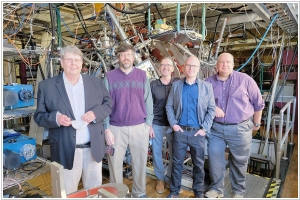
Type One Energy uses an enhanced version of a 1957 experimental Stellarator invented by US scientist Lyman Spitzer. The co-founders of Type One Energy built the world’s first optimized stellarator at the University of Wisconsin-Madison in the 1990s and conducted foundational stellarator research on it in the early 2000s. Using non-planar, high temperature superconducting magnets to optimize plasma flow, Type One Energy can surpass all fundamental technical barriers to achieving fusion energy at commercial scale. The company is building Infinity One prototype together with the 400 MWe Infinity Two fusion power plant. It plans to buildthe first power plant by 2034
Type One Energy uses an enhanced version of a 1957 experimental Stellarator invented by US scientist Lyman Spitzer. The co-founders of Type One Energy built the world’s first optimized stellarator at the University of Wisconsin-Madison in the 1990s and conducted foundational stellarator research on it in the early 2000s. Using non-planar, high temperature superconducting magnets to optimize plasma flow, Type One Energy can surpass all fundamental technical barriers to achieving fusion energy at commercial scale. The company is building Infinity One prototype together with the 400 MWe Infinity Two fusion power plant. It plans to buildthe first power plant by 2034
2

Country: China
Hanhai Energy is developing FRC nuclear fusion reactor HHMAX-901 that costs only about 200 million RMB to build, far lower than the tokamak unit. More importantly, key components of the device can be reused into the next generation, meaning we can iterate engineering faster and adapt to technological innovation. The startup backed is by top national research teams such as the Southwest Institute of Physics and the China Academy of Engineering Physics, and leveraging China’s systematic industrial support for precision processing and high-end devices
Hanhai Energy is developing FRC nuclear fusion reactor HHMAX-901 that costs only about 200 million RMB to build, far lower than the tokamak unit. More importantly, key components of the device can be reused into the next generation, meaning we can iterate engineering faster and adapt to technological innovation. The startup backed is by top national research teams such as the Southwest Institute of Physics and the China Academy of Engineering Physics, and leveraging China’s systematic industrial support for precision processing and high-end devices
3
Country: China | Funding: CN¥800M
Energy Singularity is developing the HH70 tokamak, which utilizes high-temperature superconductors and has already set a world record for commercial fusion devices by maintaining a stable plasma current in long-pulse mode for 1,337 seconds. According to the company, this achievement was made possible through the continuous optimization of an AI-based plasma control system. The company aims to reduce the levelized cost of electricity generated by fusion plants to a level comparable to, or even lower than, that of thermal power plants.
Energy Singularity is developing the HH70 tokamak, which utilizes high-temperature superconductors and has already set a world record for commercial fusion devices by maintaining a stable plasma current in long-pulse mode for 1,337 seconds. According to the company, this achievement was made possible through the continuous optimization of an AI-based plasma control system. The company aims to reduce the levelized cost of electricity generated by fusion plants to a level comparable to, or even lower than, that of thermal power plants.
4

Country: China | Funding: CN¥2.4B
NovaFusionX is developing small modular fusion reactors using a field-reversed configuration (FRC) approach. By using magnetic compression technology to increase the density and break through the threshold of fusion conditions, the system does not need to rely on ultra-high-power lasers. At the same time, through modular design, it effectively avoids a series of key technical challenges faced by tokamak reactors. Thus (according to the startup) the construction cost and R&D cycle of the nuclear fusion power plant can achieve double significant breakthroughs, and it is expected to enter the commercialization stage earlier in a shorter time.
NovaFusionX is developing small modular fusion reactors using a field-reversed configuration (FRC) approach. By using magnetic compression technology to increase the density and break through the threshold of fusion conditions, the system does not need to rely on ultra-high-power lasers. At the same time, through modular design, it effectively avoids a series of key technical challenges faced by tokamak reactors. Thus (according to the startup) the construction cost and R&D cycle of the nuclear fusion power plant can achieve double significant breakthroughs, and it is expected to enter the commercialization stage earlier in a shorter time.
5

Country: Japan | Funding: $57.5M
Helical Fusion is developing helical-type fusion stellarator reactor. Their helical design keeps incredibly hot ionized gas contained steadily by itself, eliminating the need for external electrical power and allowing operations to run longer than with rival technologies. The company has finished testing a superconducting magnet that could work on a commercial scale. This marks the first time a commercial-scale coil has operated successfully under such conditions. The company plans to construct demonstration equipment by the decade's end. During the 2030s, Helical Fusion aims to launch its first pilot facility operating continuously while generating more power than it uses.
Helical Fusion is developing helical-type fusion stellarator reactor. Their helical design keeps incredibly hot ionized gas contained steadily by itself, eliminating the need for external electrical power and allowing operations to run longer than with rival technologies. The company has finished testing a superconducting magnet that could work on a commercial scale. This marks the first time a commercial-scale coil has operated successfully under such conditions. The company plans to construct demonstration equipment by the decade's end. During the 2030s, Helical Fusion aims to launch its first pilot facility operating continuously while generating more power than it uses.
6

Country: USA | Funding: $2.9B
Commonwealth Fusion Systems is collaborating with MIT to create SPARC - the world's first fusion device that produces plasma that generates more energy than consumes. This compact, high-field tokamak will be built using high-temperature superconducting (HTS) magnets. CFS technology uses the new superconductor Rare Earth Barium Copper Oxide (REBCO) to produce the most powerful and most compact fusion magnets. Once SPARC is built, the company plans to build the world's first fusion power plant capable of generating hundreds of megawatts of power. CFS research is funded by the U.S. Department of Energy.
Commonwealth Fusion Systems is collaborating with MIT to create SPARC - the world's first fusion device that produces plasma that generates more energy than consumes. This compact, high-field tokamak will be built using high-temperature superconducting (HTS) magnets. CFS technology uses the new superconductor Rare Earth Barium Copper Oxide (REBCO) to produce the most powerful and most compact fusion magnets. Once SPARC is built, the company plans to build the world's first fusion power plant capable of generating hundreds of megawatts of power. CFS research is funded by the U.S. Department of Energy.
7

Country: USA | Funding: $1.5B
TAE Technologies is on a course to commercial fusion energy. It's fusion machine design is compact and linear so a commercial fusion power plant would be easily expandable for mass manufacturing. TAE is pursuing fusion with hydrogen-boron (a.k.a. p-B11 or p11B) because it is plentiful and radiation-free, making it the most sustainable option for running and maintaining commercial fusion power plants. TAE’s method to generate fusion power is called Advanced beam-driven Field-Reversed Configuration (FRC). All together, TAE’s approach to fusion can deliver a affordable product that has high energy density, high availability of fuel and no risk of pollution, proliferation, breakdown or toxic waste, making it the ultimate clean energy source.
TAE Technologies is on a course to commercial fusion energy. It's fusion machine design is compact and linear so a commercial fusion power plant would be easily expandable for mass manufacturing. TAE is pursuing fusion with hydrogen-boron (a.k.a. p-B11 or p11B) because it is plentiful and radiation-free, making it the most sustainable option for running and maintaining commercial fusion power plants. TAE’s method to generate fusion power is called Advanced beam-driven Field-Reversed Configuration (FRC). All together, TAE’s approach to fusion can deliver a affordable product that has high energy density, high availability of fuel and no risk of pollution, proliferation, breakdown or toxic waste, making it the ultimate clean energy source.
8

Country: USA | Funding: $1.5B
Helion Energy uses fusion energy to provide pure, safe electricity. Helion's fusion generator elevates fusion (Deuterium and helium-3) fuel to ultra-high temperatures to achieve plasma conditions and directly obtains electricity with a high-efficiency pulsed approach. Magnets confine the plasma in a Field Reversed Configuration and speed up two FRCs to 1 million mph from opposite ends of the generator. When the FRCs collide in the center of the system, they are further compressed by a strong magnetic field until they reach fusion temperatures greater than 100M degrees Celsius (150M already achieved). At this temperature, the deuterium and helium-3 ions are moving fast enough to surpass the forces that would otherwise keep them apart, and they fuse. This emits more energy than is consumed by the fusion process.
Helion Energy uses fusion energy to provide pure, safe electricity. Helion's fusion generator elevates fusion (Deuterium and helium-3) fuel to ultra-high temperatures to achieve plasma conditions and directly obtains electricity with a high-efficiency pulsed approach. Magnets confine the plasma in a Field Reversed Configuration and speed up two FRCs to 1 million mph from opposite ends of the generator. When the FRCs collide in the center of the system, they are further compressed by a strong magnetic field until they reach fusion temperatures greater than 100M degrees Celsius (150M already achieved). At this temperature, the deuterium and helium-3 ions are moving fast enough to surpass the forces that would otherwise keep them apart, and they fuse. This emits more energy than is consumed by the fusion process.
9

Country: USA | Funding: $1B
SHINE Technologies develops fusion technology primarily to inspect industrial components and produce medical isotopes. It already operates fusion technology at industrial scale using its Fusion Neutron Generator. In it high-current particle beams strike a tritium gas target, producing an intense flow of neutrons. The company is also developing technology to recycle used nuclear fuel from commercial fission reactors. SHINE's ultimate long-term goal is commercializing fusion energy for power generation, which the company plans to pursue after establishing its medical isotope and waste recycling businesses
SHINE Technologies develops fusion technology primarily to inspect industrial components and produce medical isotopes. It already operates fusion technology at industrial scale using its Fusion Neutron Generator. In it high-current particle beams strike a tritium gas target, producing an intense flow of neutrons. The company is also developing technology to recycle used nuclear fuel from commercial fission reactors. SHINE's ultimate long-term goal is commercializing fusion energy for power generation, which the company plans to pursue after establishing its medical isotope and waste recycling businesses
10

Country: USA | Funding: $900M
Pacific Fusion is developing a high-gain pulsed magnetic fusion system. Pulsed magnetic fusion involves rapidly compressing a fuel in a container with a powerful magnetic field created by passing high, rapidly increasing electric current through it. This compression heats and inertially holds the fuel, converting hydrogen into helium and releasing massive amounts of energy. The company has eliminated the magnetic system to simplify the system and its maintenance requirements. The system is highly modular, enabling affordable manufacturing and rapid iteration. It uses commonly available materials, simplifying supply chains. The modular pulser can be optimized for a wide range of target designs.
Pacific Fusion is developing a high-gain pulsed magnetic fusion system. Pulsed magnetic fusion involves rapidly compressing a fuel in a container with a powerful magnetic field created by passing high, rapidly increasing electric current through it. This compression heats and inertially holds the fuel, converting hydrogen into helium and releasing massive amounts of energy. The company has eliminated the magnetic system to simplify the system and its maintenance requirements. The system is highly modular, enabling affordable manufacturing and rapid iteration. It uses commonly available materials, simplifying supply chains. The modular pulser can be optimized for a wide range of target designs.
11

Country: Germany | Funding: €607.5M
Proxima Fusion is a spinout from the Max Planck Institute for Plasma Physics that is building a quasi-isodynamic (QI) stellarator - fusion reactor that uses magnets to hold superheated gas in place so atoms can fuse and release energy. In this approach magnetic confinement toroidal currents are canceled to zero, resulting in uniquely robust characteristics. In the absence of toroidal plasma currents, current instabilities and the risk of failures that can occur in tokamaks and other stellarator concepts can be completely eliminated. The company has also developed a new heat removal technology and has already tested an island divertor at facilities at the Institute.
Proxima Fusion is a spinout from the Max Planck Institute for Plasma Physics that is building a quasi-isodynamic (QI) stellarator - fusion reactor that uses magnets to hold superheated gas in place so atoms can fuse and release energy. In this approach magnetic confinement toroidal currents are canceled to zero, resulting in uniquely robust characteristics. In the absence of toroidal plasma currents, current instabilities and the risk of failures that can occur in tokamaks and other stellarator concepts can be completely eliminated. The company has also developed a new heat removal technology and has already tested an island divertor at facilities at the Institute.
12

Country: USA | Funding: $450M
Inertia is a fusion-energy company that is taking the most direct, scientifically-proven path to commercializing fusion, leveraging the only successful achievement of fusion ignition, using a process that was pioneered at Lawrence Livermore National Laboratory. The startup’s reactor relies on a form of fusion known as inertial confinement. In Inertia’s flavor of inertial confinement, lasers bombard a fuel target, compressing the fuel until atoms inside fuse and release energy. The technique is based on NIF’s designs, in which laser light is converted into X-rays inside the target. The X-rays are what ultimately heat and compress the fuel pellet.
Inertia is a fusion-energy company that is taking the most direct, scientifically-proven path to commercializing fusion, leveraging the only successful achievement of fusion ignition, using a process that was pioneered at Lawrence Livermore National Laboratory. The startup’s reactor relies on a form of fusion known as inertial confinement. In Inertia’s flavor of inertial confinement, lasers bombard a fuel target, compressing the fuel until atoms inside fuse and release energy. The technique is based on NIF’s designs, in which laser light is converted into X-rays inside the target. The X-rays are what ultimately heat and compress the fuel pellet.
13

Country: Germany | Funding: $400M
Marvel Fusion is developing an advanced inertial fusion energy concept that combines a proprietary fast ignitor concept with key innovations for lasers, targets, and power plant technology. It builds on the fusion approach that demonstrated target energy gain at the National Ignition Facility in 2022. With the underlying physics validated, the startup is focusing on the ignition process as the key to making laser-based inertial fusion energy commercially viable. Company's strategic partner is Siemens Energy,
Marvel Fusion is developing an advanced inertial fusion energy concept that combines a proprietary fast ignitor concept with key innovations for lasers, targets, and power plant technology. It builds on the fusion approach that demonstrated target energy gain at the National Ignition Facility in 2022. With the underlying physics validated, the startup is focusing on the ignition process as the key to making laser-based inertial fusion energy commercially viable. Company's strategic partner is Siemens Energy,
14

Country: Canada | Funding: $392M
General Fusion is developing utility-scale fusion power using a new, patent pending concept based on recent developments in Magnetized Target Fusion (MTF). It is the goal of General Fusion to demonstrate and commercialize this new clean, safe and economical concept by the end of the decade.
General Fusion is developing utility-scale fusion power using a new, patent pending concept based on recent developments in Magnetized Target Fusion (MTF). It is the goal of General Fusion to demonstrate and commercialize this new clean, safe and economical concept by the end of the decade.
15

Country: Germany | Funding: $361.7M
Focused Energy is developing fusion reactor that uses lasers to compress fuel (inertial confinement). Lasers strike a fuel target, which is compressed by the laser radiation, creating conditions favorable for fusion. When the atoms within the fuel finally fuse, they release a significant amount of energy. The company bases its design on an experiment conducted at the National Fusion Facility which remains the first and only one to create a controlled nuclear fusion reaction that released more energy than it took to start it. Focused Energy is working on simplifying the fuel target. One simplification involves eliminating the hohlraum - the high-precision gold cylinder that converts laser energy into X-rays.
Focused Energy is developing fusion reactor that uses lasers to compress fuel (inertial confinement). Lasers strike a fuel target, which is compressed by the laser radiation, creating conditions favorable for fusion. When the atoms within the fuel finally fuse, they release a significant amount of energy. The company bases its design on an experiment conducted at the National Fusion Facility which remains the first and only one to create a controlled nuclear fusion reaction that released more energy than it took to start it. Focused Energy is working on simplifying the fuel target. One simplification involves eliminating the hohlraum - the high-precision gold cylinder that converts laser energy into X-rays.
16

Country: USA | Funding: $337.8M
Zap Energy intends to build commercial fusion reactor that does not employ magnets, cryogenics or high-powered lasers. This technology is known as sheared-flow-stabilized Z-pinch. It's an electromagnetic phenomenon where electric currents create magnetic fields so powerful that they compress matter. Zap's reactor uses electrodes to send electricity through deuterium/tritium plasma, which causes the plasma to generate a magnetic field. When the temperature reaches millions of degrees Fahrenheit and magnetic field is strong enough (gigapascals) - the plasma is compressed to the point where particles fuse (and began to generate more energy than consume). The company has set the world record of the resulting pressure/heat (though there is also third quality parameter - duration)
Zap Energy intends to build commercial fusion reactor that does not employ magnets, cryogenics or high-powered lasers. This technology is known as sheared-flow-stabilized Z-pinch. It's an electromagnetic phenomenon where electric currents create magnetic fields so powerful that they compress matter. Zap's reactor uses electrodes to send electricity through deuterium/tritium plasma, which causes the plasma to generate a magnetic field. When the temperature reaches millions of degrees Fahrenheit and magnetic field is strong enough (gigapascals) - the plasma is compressed to the point where particles fuse (and began to generate more energy than consume). The company has set the world record of the resulting pressure/heat (though there is also third quality parameter - duration)
17

Country: China | Funding: CN¥2.4B
Startorus Fusion is a commercial nuclear fusion company, building spherical tokamak device SUNIST-2 in collaboration with Tsinghua University. The spherical tokamak, as a compact tokamak device, is more economical in terms of funding and space utilization. Due to its design, it has a higher ratio of plasma pressure to magnetic field pressure. The company already completed its first operational run, achieving a plasma current of 100 kiloamperes. It is the strongest magnetic field and highest-performance spherical tokamak in China. The startup is targeting technical verification by 2028 and pilot plant by 2032.
Startorus Fusion is a commercial nuclear fusion company, building spherical tokamak device SUNIST-2 in collaboration with Tsinghua University. The spherical tokamak, as a compact tokamak device, is more economical in terms of funding and space utilization. Due to its design, it has a higher ratio of plasma pressure to magnetic field pressure. The company already completed its first operational run, achieving a plasma current of 100 kiloamperes. It is the strongest magnetic field and highest-performance spherical tokamak in China. The startup is targeting technical verification by 2028 and pilot plant by 2032.
18

Country: UK | Funding: $287M
Tokamak Energy aims to accelerate the development of fusion energy. It designed, built and operated two of the world’s most advanced fusion facilities: ST40, the world’s highest-field spherical tokamak, and Demo4, the first HTS fusion magnet system to achieve fusion-relevant magnetic fields in a dedicated test facility. ST40 has already achieved a series of major milestones, including a plasma ion temperature of 100 million degrees Celsius, the threshold for commercial fusion energy, plasma current of 1 MA, demonstrating operation in high-performance regimes. ST40 is currently undergoing a major upgrade under LEAPS (Lithium Evaporations to Advance PFCs in ST40), a joint UK-U.S. programme supported by the U.S DoE.
Tokamak Energy aims to accelerate the development of fusion energy. It designed, built and operated two of the world’s most advanced fusion facilities: ST40, the world’s highest-field spherical tokamak, and Demo4, the first HTS fusion magnet system to achieve fusion-relevant magnetic fields in a dedicated test facility. ST40 has already achieved a series of major milestones, including a plasma ion temperature of 100 million degrees Celsius, the threshold for commercial fusion energy, plasma current of 1 MA, demonstrating operation in high-performance regimes. ST40 is currently undergoing a major upgrade under LEAPS (Lithium Evaporations to Advance PFCs in ST40), a joint UK-U.S. programme supported by the U.S DoE.
19

Country: China | Funding: CN¥1.5B
Neo Fusion is building and operating BEST (Burning Plasma Experimental Superconducting) tokamak at the Institute of Plasma Physics of the Chinese Academy of Sciences. It utilizes "burning plasma" i.e., regime close to self-sustaining nuclear fusion. Neo Fusion is 50% controlled by state-owned energy companies (China National Petroleum Corporation and Hefei Science Island) and the Chinese Academy of Sciences. The company plans to use nuclear fusion technology to produce enterprise energy appliances, providing businesses with clean energy technologies that generate electricity without generating radioactive waste.
Neo Fusion is building and operating BEST (Burning Plasma Experimental Superconducting) tokamak at the Institute of Plasma Physics of the Chinese Academy of Sciences. It utilizes "burning plasma" i.e., regime close to self-sustaining nuclear fusion. Neo Fusion is 50% controlled by state-owned energy companies (China National Petroleum Corporation and Hefei Science Island) and the Chinese Academy of Sciences. The company plans to use nuclear fusion technology to produce enterprise energy appliances, providing businesses with clean energy technologies that generate electricity without generating radioactive waste.
20

Country: Japan | Funding: ¥22.3B
Kyoto Fusioneering is developing fusion-neutron / breeding-blanket Unity-3 that allows to harvest energy from the reactor while also generating fresh fusion fuel. The breeding blanket design will use liquid lithium, which will absorb both heat and neutrons. As the lithium atoms in the blanket are bombarded with neutrons, they split into helium and tritium, an isotope of hydrogen that’s an important fuel for many reactor designs. The tritium is then separated from the blanket and sent to the reactor, while heat is extracted to generate power. Kyoto Fusioneering is also developing systems to heat fusion fuel into a plasma, recycle unburned fuel from the exhaust, and harvest heat to generate electricity.
Kyoto Fusioneering is developing fusion-neutron / breeding-blanket Unity-3 that allows to harvest energy from the reactor while also generating fresh fusion fuel. The breeding blanket design will use liquid lithium, which will absorb both heat and neutrons. As the lithium atoms in the blanket are bombarded with neutrons, they split into helium and tritium, an isotope of hydrogen that’s an important fuel for many reactor designs. The tritium is then separated from the blanket and sent to the reactor, while heat is extracted to generate power. Kyoto Fusioneering is also developing systems to heat fusion fuel into a plasma, recycle unburned fuel from the exhaust, and harvest heat to generate electricity.
21

Country: USA | Funding: $140M
Thea Energy is developing pixel-inspired Helios fusion reactor that will offer a lower cost than competitors. It's a stellarator - a special type of reactor that uses magnets to shape plasma fuel into the desired shape. These magnets are small, identical superconducting magnets, allowing for mass production. The startup will use software to individually control each magnet to generate magnetic fields that can replicate the stellarator's unstable shape. This approach allows rapid optimization of the magnet design. Helios is projected to generate 390 megawatts of electricity at a cost of under $150 per megawatt-hour. Production is scheduled to start around 2030.
Thea Energy is developing pixel-inspired Helios fusion reactor that will offer a lower cost than competitors. It's a stellarator - a special type of reactor that uses magnets to shape plasma fuel into the desired shape. These magnets are small, identical superconducting magnets, allowing for mass production. The startup will use software to individually control each magnet to generate magnetic fields that can replicate the stellarator's unstable shape. This approach allows rapid optimization of the magnet design. Helios is projected to generate 390 megawatts of electricity at a cost of under $150 per megawatt-hour. Production is scheduled to start around 2030.
22

Country: USA | Funding: $117.8M
Xcimer develops laser system Phoenix – the largest privately owned laser system in the world and the company’s prototype for commercializing laser fusion. Housed in Xcimer’s 74,000-square-foot Denver laser facility, Phoenix is a proof of concept for an unconventional fusion architecture: a krypton fluoride (KrF) excimer laser using Stimulated Brillouin Scattering (SBS) to compress a microsecond-long pulse into the nanosecond timescales fusion requires. Phoenix is designed to demonstrate end-to-end integrated operation of excimer amplification and SBS pulse compression.
Xcimer develops laser system Phoenix – the largest privately owned laser system in the world and the company’s prototype for commercializing laser fusion. Housed in Xcimer’s 74,000-square-foot Denver laser facility, Phoenix is a proof of concept for an unconventional fusion architecture: a krypton fluoride (KrF) excimer laser using Stimulated Brillouin Scattering (SBS) to compress a microsecond-long pulse into the nanosecond timescales fusion requires. Phoenix is designed to demonstrate end-to-end integrated operation of excimer amplification and SBS pulse compression.
23

Country: Canada | Funding: $117M
Fuse intends to build a MagLIF (Magnetized Liner Inertial Fusion) reactor in which energy is delivered to the fuel by an impedance-matched Marx generator. This device first charges a multitude of capacitors in parallel—relatively slowly—and then connects them very rapidly to produce a short, high-voltage pulse of immense power.
Fuse intends to build a MagLIF (Magnetized Liner Inertial Fusion) reactor in which energy is delivered to the fuel by an impedance-matched Marx generator. This device first charges a multitude of capacitors in parallel—relatively slowly—and then connects them very rapidly to produce a short, high-voltage pulse of immense power.
24

Country: UK | Funding: $107M
First Light Fusion (FLF) develops Inertial confinement fusion reactor that can produce power. It's powered by two-stage fusion fuel system FLARE that combines efficient compression with fast ignition to enable a simpler, more scalable path to fusion power. The standard fusion fuel, deuterium-tritium, is wrapped in a dense, heavy pusher. The driver pushes it inward, squeezing like a fist to make it hundreds of times denser than it started. When the fuel is compressed, a separate pulse ignites one small region. That spark spreads outward as a self-sustaining burn, like a fuse running through a much larger charge.
First Light Fusion (FLF) develops Inertial confinement fusion reactor that can produce power. It's powered by two-stage fusion fuel system FLARE that combines efficient compression with fast ignition to enable a simpler, more scalable path to fusion power. The standard fusion fuel, deuterium-tritium, is wrapped in a dense, heavy pusher. The driver pushes it inward, squeezing like a fist to make it hundreds of times denser than it started. When the fuel is compressed, a separate pulse ignites one small region. That spark spreads outward as a self-sustaining burn, like a fuse running through a much larger charge.
25

Country: China | Funding: $100M
SunUp Fusion is constructing its first-generation experimental device, compact high-field tokamak codenamed "Morning Light". The startup is pursuing a differentiated technological path centered on a Deuterium-Helium-3 (D-He3) fuel cycle. Its compact D-He3 power plants are designed for flexible deployment near urban centers or data hubs. This strategy would allow them to work in tandem with larger, remote D-T facilities to form an integrated and versatile energy grid.
SunUp Fusion is constructing its first-generation experimental device, compact high-field tokamak codenamed "Morning Light". The startup is pursuing a differentiated technological path centered on a Deuterium-Helium-3 (D-He3) fuel cycle. Its compact D-He3 power plants are designed for flexible deployment near urban centers or data hubs. This strategy would allow them to work in tandem with larger, remote D-T facilities to form an integrated and versatile energy grid.
26

Country: USA | Funding: $84M
Avalanche is a fusion energy startup that, unlike its competitors, is trying to create a miniature version of the fusion reactor. Their reactor is only 9 centimeters in diameter (the new version will increase to 25 centimeters and is expected to produce around 1 megawatt). The smaller size allowes Avalanche to speed up the process. The company tests modifications to its devices "sometimes twice a week," which would be difficult and expensive with a larger device. To confine the plasma, Avalanche's reactor uses an extremely high-voltage electric current to attract plasma particles into orbit around an electrode. It also uses magnets to maintain order, although they are nowhere near as powerful as those in a tokamak. As the orbit narrows and the plasma speed increases, the particles begin to collide with each other and fuse.
Avalanche is a fusion energy startup that, unlike its competitors, is trying to create a miniature version of the fusion reactor. Their reactor is only 9 centimeters in diameter (the new version will increase to 25 centimeters and is expected to produce around 1 megawatt). The smaller size allowes Avalanche to speed up the process. The company tests modifications to its devices "sometimes twice a week," which would be difficult and expensive with a larger device. To confine the plasma, Avalanche's reactor uses an extremely high-voltage electric current to attract plasma particles into orbit around an electrode. It also uses magnets to maintain order, although they are nowhere near as powerful as those in a tokamak. As the orbit narrows and the plasma speed increases, the particles begin to collide with each other and fuse.
27

Country: USA | Funding: $57.5M
Realta Fusion develops fusion energy technology for the production of industrial heat and power. Its magnetic mirror confines a plasma between two high field superconducting magnets. The strong magnetic fields cause charged, energetic particles to bounce back and forth, also known as the mirror effect. The technology uses ion and electron RF heating with high energy neutral particle injection to optimize plasma performance. The startup was the first to successfully power a light bulb using the WHAM demonstration fusion reactor. The power converter is installed at the end of the reactor and generates up to several amperes of electricity at 100 volts.
Realta Fusion develops fusion energy technology for the production of industrial heat and power. Its magnetic mirror confines a plasma between two high field superconducting magnets. The strong magnetic fields cause charged, energetic particles to bounce back and forth, also known as the mirror effect. The technology uses ion and electron RF heating with high energy neutral particle injection to optimize plasma performance. The startup was the first to successfully power a light bulb using the WHAM demonstration fusion reactor. The power converter is installed at the end of the reactor and generates up to several amperes of electricity at 100 volts.
28

Country: France | Funding: €47M
Renaissance Fusion is a high-temperature superconductor and stellarator company. It has simplified the stellarator design: built 1D or 2D coils (on cylindrical surfaces, not necessarily of circular cross-section) to generate the complex 3D magnetic fields. The startup is also skipping some intermediate steps and directly depositing and patterning High Temperature Superconductors on large surfaces. The benefits are impressive: a 4x increase in magnetic field reduces the plasma volume by 256x. The liquid Lithium-based walls of the reactor stop 99.99% of the neutron energy before they can reach solid materials and make them radioactive.
Renaissance Fusion is a high-temperature superconductor and stellarator company. It has simplified the stellarator design: built 1D or 2D coils (on cylindrical surfaces, not necessarily of circular cross-section) to generate the complex 3D magnetic fields. The startup is also skipping some intermediate steps and directly depositing and patterning High Temperature Superconductors on large surfaces. The benefits are impressive: a 4x increase in magnetic field reduces the plasma volume by 256x. The liquid Lithium-based walls of the reactor stop 99.99% of the neutron energy before they can reach solid materials and make them radioactive.
29

Country: China | Funding: $44.6M
Dongxi is focuses on the commercial exploration of laser inertial confinement fusion. It's developing high-energy laser drivers, target engineering, experimental diagnostics, simulation, system integration, and AI-assisted research. It aims to build repeatable engineering capabilities as laser fusion moves from scientific proof to engineering validation.
Dongxi is focuses on the commercial exploration of laser inertial confinement fusion. It's developing high-energy laser drivers, target engineering, experimental diagnostics, simulation, system integration, and AI-assisted research. It aims to build repeatable engineering capabilities as laser fusion moves from scientific proof to engineering validation.
30

Country: UK | Funding: £27.5M
Astral Systems has built a compact fusion device that produces medical radioisotopes on demand, aimed at hospitals and researchers who currently rely on a handful of ageing reactors worldwide. Its SIC codes span basic pharmaceutical manufacturing and irradiation equipment, categories that miss its fusion technology entirely. Startups's clients include UKAEA and the National Nuclear Laboratory.
Astral Systems has built a compact fusion device that produces medical radioisotopes on demand, aimed at hospitals and researchers who currently rely on a handful of ageing reactors worldwide. Its SIC codes span basic pharmaceutical manufacturing and irradiation equipment, categories that miss its fusion technology entirely. Startups's clients include UKAEA and the National Nuclear Laboratory.
31
Country: Canada | Funding: $34.5M
Fusion Fuel Cycles is a provider of fuel cycle technologies that supplies end-to-end solutions to deliver performance-driven fuel cycle. It's a joint venture between Kyoto Fusioneering and Canadian Nuclear Laboratories. Based on over 70 years of tritium research and support to the global CANDU reactor fleet, CNL’s experts and facilities are among the world’s best for practical research that improves facility safety, performance, and reliability.
Fusion Fuel Cycles is a provider of fuel cycle technologies that supplies end-to-end solutions to deliver performance-driven fuel cycle. It's a joint venture between Kyoto Fusioneering and Canadian Nuclear Laboratories. Based on over 70 years of tritium research and support to the global CANDU reactor fleet, CNL’s experts and facilities are among the world’s best for practical research that improves facility safety, performance, and reliability.
32

Country: Japan | Funding: ¥4.9B
EX-Fusion develops the first commercial laser based nuclear fusion reactor based on a fast ignition method called LIFT. This design was proposed by the Institute of Laser Science, Osaka University. First, a fuel target accelerated to a velocity of 100 m/s is injected toward the center of the reactor. As soon as the target reaches to the center, lasers irradiate the target from all directions to implode the fuel target, and another laser is irradiated to the fuel to induce a fusion reaction. The neutron energy produced by the fusion reaction is absorbed by a device called a “blanket” surrounding the center of the reactor. Then, the energy is converted to electrical energy by heating water in a heat exchanger to turn a turbine. When the cycle from target injection to fuel ignition can be stably repeated at a frequency of 10 times per second, it is believed that the system can be operated as a power plant.
EX-Fusion develops the first commercial laser based nuclear fusion reactor based on a fast ignition method called LIFT. This design was proposed by the Institute of Laser Science, Osaka University. First, a fuel target accelerated to a velocity of 100 m/s is injected toward the center of the reactor. As soon as the target reaches to the center, lasers irradiate the target from all directions to implode the fuel target, and another laser is irradiated to the fuel to induce a fusion reaction. The neutron energy produced by the fusion reaction is absorbed by a device called a “blanket” surrounding the center of the reactor. Then, the energy is converted to electrical energy by heating water in a heat exchanger to turn a turbine. When the cycle from target injection to fuel ignition can be stably repeated at a frequency of 10 times per second, it is believed that the system can be operated as a power plant.
33

Country: Israel | Funding: $27M
nT-Tao is developing a 20 MWe compact fusion energy system, the Tao Energy Box, based on a pulsed, high-density magnetic confinement generator, the Tao Core. By combining mature plasma physics, stellarator confinement topology, and advanced pulsed power electronics, the Tao Core enables smaller on-site power units designed for mass manufacturing and deployment close to demand. The Tao Core is designed for high magnetic fields (8–10 Tesla) within a compact stellarator geometry, while rotating electromagnetic fields reduce plasma instabilities during the heating-cycle pulses. This enables stable plasma confinement while reducing overall system size and complexity.
nT-Tao is developing a 20 MWe compact fusion energy system, the Tao Energy Box, based on a pulsed, high-density magnetic confinement generator, the Tao Core. By combining mature plasma physics, stellarator confinement topology, and advanced pulsed power electronics, the Tao Core enables smaller on-site power units designed for mass manufacturing and deployment close to demand. The Tao Core is designed for high magnetic fields (8–10 Tesla) within a compact stellarator geometry, while rotating electromagnetic fields reduce plasma instabilities during the heating-cycle pulses. This enables stable plasma confinement while reducing overall system size and complexity.
34

Country: Australia | Funding: $22M
HB11 Energy is developing Laser Hydrogen Boron-11 fusion to provide a new source of unlimited, clean, safe and reliable energy. It intends to generate electricity using laser-ignited non-thermal fusion. The company deployed a nanosecond and picosecond two-pulse laser system to achieve Fast Ignition. Focused energy accelerates protons and initiates fusion within a compressed fuel pellet. Hydrogen-Boron fuel pellets are injected and burned at a rate of about 1 per second. The energy released drives a conventional steam cycle generator.
HB11 Energy is developing Laser Hydrogen Boron-11 fusion to provide a new source of unlimited, clean, safe and reliable energy. It intends to generate electricity using laser-ignited non-thermal fusion. The company deployed a nanosecond and picosecond two-pulse laser system to achieve Fast Ignition. Focused energy accelerates protons and initiates fusion within a compressed fuel pellet. Hydrogen-Boron fuel pellets are injected and burned at a rate of about 1 per second. The energy released drives a conventional steam cycle generator.
35

Country: Germany | Funding: €18M
Gauss Fusion is leading the implementation and commercialization of Fusion Power Plants as a magnetic confinement fusion innovator and as architect of the first industrialized gigawatt-class power plant. It's using former nuclear fission power plant sites including their infrastructure for accelerating construction and reducing costs, collaborating with authorities to accelerate licensing process for fusion power plants, integrating fusion power into the grid as a base load provider to complement renewables
Gauss Fusion is leading the implementation and commercialization of Fusion Power Plants as a magnetic confinement fusion innovator and as architect of the first industrialized gigawatt-class power plant. It's using former nuclear fission power plant sites including their infrastructure for accelerating construction and reducing costs, collaborating with authorities to accelerate licensing process for fusion power plants, integrating fusion power into the grid as a base load provider to complement renewables
36

Country: USA | Funding: $10M
LPPFusion develops Focus Fusion generator, based on the Dense Plasma Focus device and the aneutronic, hydrogen-boron (pB11) fuel. The core of the device are electrodes which “focus” the filaments from within the plasma in the chamber into a single point, called plasmoid, where fusion reactions take place. So far, the startup has been experimenting with experimental gases only which give lower fusion energy output yield. Once it develops the higher voltage switch technology, needed to ignite the fusion reactions, it will start experimenting with the ultimate high density nuclear pB11 fuel which will produce much higher fusion energy yield.
LPPFusion develops Focus Fusion generator, based on the Dense Plasma Focus device and the aneutronic, hydrogen-boron (pB11) fuel. The core of the device are electrodes which “focus” the filaments from within the plasma in the chamber into a single point, called plasmoid, where fusion reactions take place. So far, the startup has been experimenting with experimental gases only which give lower fusion energy output yield. Once it develops the higher voltage switch technology, needed to ignite the fusion reactions, it will start experimenting with the ultimate high density nuclear pB11 fuel which will produce much higher fusion energy yield.
37

Country: UK
UK Fusion Energy is leading the delivery of the STEP Fusion (Spherical Tokamak for Energy Production) - UK’s government-funded industry partnership program designed to scale a consistent fusion energy supply. It develops the prototype fusion energy plant at West Burton. The program coordinates plant design, engineering, technology development, site preparation, and industrial partnerships. Its objectives include demonstrating net energy production, fuel self-sufficiency, and a route toward commercial fusion power plants.
UK Fusion Energy is leading the delivery of the STEP Fusion (Spherical Tokamak for Energy Production) - UK’s government-funded industry partnership program designed to scale a consistent fusion energy supply. It develops the prototype fusion energy plant at West Burton. The program coordinates plant design, engineering, technology development, site preparation, and industrial partnerships. Its objectives include demonstrating net energy production, fuel self-sufficiency, and a route toward commercial fusion power plants.
38

Country: India | Funding: $7.2M
Pranos Fusion is building the tokamak technology across design software, control systems and High-Temperature Superconducting magnets, all integrated into a breakthrough small aspect-ratio tokamak. Its first low-aspect-ratio, medium-scale tokamak PRAGYA is built for advanced plasma control and integrated with JENGA - tokamak design and control software that integrates control-oriented design from the outset, ensuring that reactor design choices support stable operation.
Pranos Fusion is building the tokamak technology across design software, control systems and High-Temperature Superconducting magnets, all integrated into a breakthrough small aspect-ratio tokamak. Its first low-aspect-ratio, medium-scale tokamak PRAGYA is built for advanced plasma control and integrated with JENGA - tokamak design and control software that integrates control-oriented design from the outset, ensuring that reactor design choices support stable operation.
39

Country: USA | Funding: $6.9M
Marathon Fusion designs, engineers and scales next-generation technologies to enable the deployment of fusion power plants. In deuterium-tritium fusion, high-energy neutrons drive "multiplication" reactions to close the fuel cycle by producing the tritium needed to sustain operation. Making use of those neutrons to drive a multiplication reaction on mercury-198, startup's approach produces mercury-197 which then decays in a few days to the only stable isotope of gold. Using Marathon's approach, power plants can generate five thousand kilograms of "gold" per year, per gigawatt of electricity generation.
Marathon Fusion designs, engineers and scales next-generation technologies to enable the deployment of fusion power plants. In deuterium-tritium fusion, high-energy neutrons drive "multiplication" reactions to close the fuel cycle by producing the tritium needed to sustain operation. Making use of those neutrons to drive a multiplication reaction on mercury-198, startup's approach produces mercury-197 which then decays in a few days to the only stable isotope of gold. Using Marathon's approach, power plants can generate five thousand kilograms of "gold" per year, per gigawatt of electricity generation.
40

Country: New Zealand | Funding: NZ$10M
OpenStar Technologies is a renewable energy company that develops fusion reactors for baseload power to the grid. Its levitated dipole fusion technology is turning the tokamak design inside out. Instead of having plasma inside magnets, it has a magnet inside the plasma. Its reactor features a single, extremely powerful magnet levitating inside a vacuum chamber about 5 metres wide, which looks like a steel donut on legs. The design is modelled after the plasma in planetary magnetic fields, including Earth's. The advantage of this reactor is it's easier and faster to engineer than a tokamak.
OpenStar Technologies is a renewable energy company that develops fusion reactors for baseload power to the grid. Its levitated dipole fusion technology is turning the tokamak design inside out. Instead of having plasma inside magnets, it has a magnet inside the plasma. Its reactor features a single, extremely powerful magnet levitating inside a vacuum chamber about 5 metres wide, which looks like a steel donut on legs. The design is modelled after the plasma in planetary magnetic fields, including Earth's. The advantage of this reactor is it's easier and faster to engineer than a tokamak.
41

Country: USA | Funding: $3.6M
ExoFusion is developing Super-XT - divertor for toroidal fusion devices, which can increase plasma confinement and address the most pressing challenge - heat dissipation and material erosion. Super-XT maintains very high plasma temperatures at the plasma-material interface and uses magnetic fields to dissipate waste heat. ExoFusion is also developing new liquid metals that enable the creation of new and improved solutions for the plasma-material interface problem and compact high-volume fusion neutron source. The company's business model includes the sale or licensing of patents and the provision of modeling, testing and other support for fusion technology design.
ExoFusion is developing Super-XT - divertor for toroidal fusion devices, which can increase plasma confinement and address the most pressing challenge - heat dissipation and material erosion. Super-XT maintains very high plasma temperatures at the plasma-material interface and uses magnetic fields to dissipate waste heat. ExoFusion is also developing new liquid metals that enable the creation of new and improved solutions for the plasma-material interface problem and compact high-volume fusion neutron source. The company's business model includes the sale or licensing of patents and the provision of modeling, testing and other support for fusion technology design.
42

Country: Germany
Pulsar Fusion has designed the first launch-capable, high-power chemical rocket engine powered by fusion reactor. Its Dual Direct Fusion Drive is a compact design nuclear fusion engine which could provide both thrust and electrical power for spaceships. This technology opens unprecedented possibilities to explore the solar system in a limited amount of time and with a very high payload to propellant masses ratio.
Pulsar Fusion has designed the first launch-capable, high-power chemical rocket engine powered by fusion reactor. Its Dual Direct Fusion Drive is a compact design nuclear fusion engine which could provide both thrust and electrical power for spaceships. This technology opens unprecedented possibilities to explore the solar system in a limited amount of time and with a very high payload to propellant masses ratio.
43

Country: USA | Funding: $390K
NearStar Fusion is developing a new pulsed approach to create fusion called Hypervelocity Gradient Field Fusion (HGFF) which builds on a successful method of imploding metallic liners (Z machine) combined with a repeatable theta pinch process developed under a NASA Innovative Advanced Concept study.
NearStar Fusion is developing a new pulsed approach to create fusion called Hypervelocity Gradient Field Fusion (HGFF) which builds on a successful method of imploding metallic liners (Z machine) combined with a repeatable theta pinch process developed under a NASA Innovative Advanced Concept study.
44

Country: UK
Fusion Reactors is developing a fusion reactor to deliver electricity to the grid. With experience both in the state sector (JET - the premier fusion experiment of the world) and the private sector, Fusion Reactors has the knowledge and experience to design, build, run and evolve multiple fusion reactor designs.
Fusion Reactors is developing a fusion reactor to deliver electricity to the grid. With experience both in the state sector (JET - the premier fusion experiment of the world) and the private sector, Fusion Reactors has the knowledge and experience to design, build, run and evolve multiple fusion reactor designs.
45

Country: Canada
Stellarex is a fusion energy development firm that uses a simplified Stellarator and milestone‑driven demonstrators to validate systems integration, de‑risk scale‑up, and execute a staged technology roadmap from prototypes through demonstration devices to commercial fusion power plants. It's running two device programs - SXA (intermediate prototype) and SX0 (net‑energy demonstrator) - run in parallel from 2026 through 2032, anchored by the launch of the Centre for Fusion Energy.
Stellarex is a fusion energy development firm that uses a simplified Stellarator and milestone‑driven demonstrators to validate systems integration, de‑risk scale‑up, and execute a staged technology roadmap from prototypes through demonstration devices to commercial fusion power plants. It's running two device programs - SXA (intermediate prototype) and SX0 (net‑energy demonstrator) - run in parallel from 2026 through 2032, anchored by the launch of the Centre for Fusion Energy.
46

Country: UK
digiLab is developing AI Platform - Uncertainty Engine - that allows to model plasma turbulence by building fast, surrogate models of complex simulations. It helps to explore advanced physics and accelerate fusion research confidently. digiLab is working closely in partnership with the UK Atomic Energy Authority (UKAEA) to make significant advancements in fusion energy research and development. By combining digiLab's expertise in probabilistic AI with UKAEA's world-leading fusion knowledge, this collaboration is accelerating the path to viable fusion energy.
digiLab is developing AI Platform - Uncertainty Engine - that allows to model plasma turbulence by building fast, surrogate models of complex simulations. It helps to explore advanced physics and accelerate fusion research confidently. digiLab is working closely in partnership with the UK Atomic Energy Authority (UKAEA) to make significant advancements in fusion energy research and development. By combining digiLab's expertise in probabilistic AI with UKAEA's world-leading fusion knowledge, this collaboration is accelerating the path to viable fusion energy.
47

Country: UK
Oxford Sigma develops and supplies materials technology and engineering solutions for fusion energy. It develops materials and neutron technology for fusion reactors, including tungsten alloys and lithium ceramics for tritium breeding. The startup works with UKAEA on the STEP programme.
Oxford Sigma develops and supplies materials technology and engineering solutions for fusion energy. It develops materials and neutron technology for fusion reactors, including tungsten alloys and lithium ceramics for tritium breeding. The startup works with UKAEA on the STEP programme.
48

Country: China
FusionAlpha develops AI software simulator designed to help developers test fusion reactor designs on computers before committing to expensive physical experiments
FusionAlpha develops AI software simulator designed to help developers test fusion reactor designs on computers before committing to expensive physical experiments