1

Country: USA | Funding: $1.8M
Valar Atomics develops small modular nuclear reactors using proven high-temperature gas reactor (HTGR) technology combined with safe TRISO fuel. HTGRs are optimized to produce high-quality process heat which is used for industrial and chemical applications, providing nearby partners with affordable, abundant and clean energy. Using TRISO-coated fuel particles and helium coolant, the HTGRs passively remove decay heat without active systems or operator intervention. This design minimizes the risk of core damage even in severe accident scenarios. The company plans to mass-produce the reactors and deploy them at so-called gigasites, where they will power AI data centers, industrial facilities, and other customers.
Valar Atomics develops small modular nuclear reactors using proven high-temperature gas reactor (HTGR) technology combined with safe TRISO fuel. HTGRs are optimized to produce high-quality process heat which is used for industrial and chemical applications, providing nearby partners with affordable, abundant and clean energy. Using TRISO-coated fuel particles and helium coolant, the HTGRs passively remove decay heat without active systems or operator intervention. This design minimizes the risk of core damage even in severe accident scenarios. The company plans to mass-produce the reactors and deploy them at so-called gigasites, where they will power AI data centers, industrial facilities, and other customers.
2

Country: USA | Funding: $596M
Antares designs and builds microfission reactors for strategic energy applications, including space missions, commercial and military energy resilience. Its R1 microreactor can produce from 100 kilowatts to 1 megawatt and uses TRISO fuel, which consists of uranium spheres coated with carbon and ceramics, embedded in graphite. It's designed to run safely and autonomously for 6+ years without refueling. The company performs high-precision machining of the nuclear graphite in-house, speeding design iterations. The optimized reactor design simplifies deployment with a minimal number of actuators. The control drums, made of graphite and boron carbide, have independent actuators, inspired by the designs of historical space reactors. Antares has a manufacturing facility in California and has already tested the first electrically heated demonstration unit (EDU).
Antares designs and builds microfission reactors for strategic energy applications, including space missions, commercial and military energy resilience. Its R1 microreactor can produce from 100 kilowatts to 1 megawatt and uses TRISO fuel, which consists of uranium spheres coated with carbon and ceramics, embedded in graphite. It's designed to run safely and autonomously for 6+ years without refueling. The company performs high-precision machining of the nuclear graphite in-house, speeding design iterations. The optimized reactor design simplifies deployment with a minimal number of actuators. The control drums, made of graphite and boron carbide, have independent actuators, inspired by the designs of historical space reactors. Antares has a manufacturing facility in California and has already tested the first electrically heated demonstration unit (EDU).
3

Country: USA | Funding: $518.8M
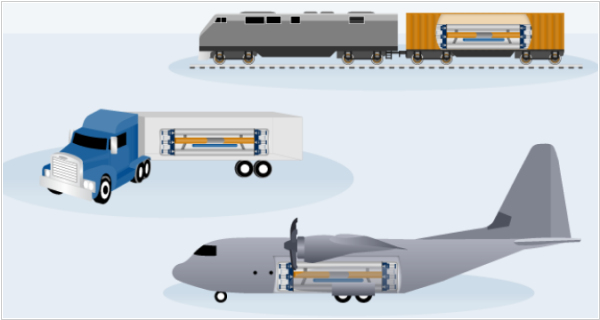
Radiant produces a portable nuclear microreactor Kaleidos that can replace diesel generators. It is a compact nuclear reactor (1 MW) working on meltdown-resistant TRISO fuel with all the necessary equipment to generate electricity for remote villages and facilities, as well as backup power for hospitals and data centers. It requires no on-site water consumption thanks to the use of fans for air cooling. Helium conducts heat away from the core and does not become radioactive, eliminating the impact of leaks. The reactor is assembled and fueled at the factory and delivered by truck or plane. Radiant has a contract to mass-produce microreactors for US military bases.
Radiant produces a portable nuclear microreactor Kaleidos that can replace diesel generators. It is a compact nuclear reactor (1 MW) working on meltdown-resistant TRISO fuel with all the necessary equipment to generate electricity for remote villages and facilities, as well as backup power for hospitals and data centers. It requires no on-site water consumption thanks to the use of fans for air cooling. Helium conducts heat away from the core and does not become radioactive, eliminating the impact of leaks. The reactor is assembled and fueled at the factory and delivered by truck or plane. Radiant has a contract to mass-produce microreactors for US military bases.
4

Country: USA | Funding: $136M
Aalo makes small, factory-manufactured nuclear power plants for data-centers. Named Aalo Pod, it's a rapidly deployable 50 MWe power plant with five 10 MWe extra-modular reactor (XMR) reactors sharing multiple turbines. It's designed for phased maintenance and never goes offline. It's comprised of factory-manufactured standardize modules that fit on the back of the truck. The whole power plant, not just the core, is factory-built in shipping-container-sized modules. The company says: construction takes days, not years. Aalo operates vertically integrated Gigawatt factory in Austin designed to produce 1 GW reactors per year. It intends to deploy one gigawatt of nuclear capacity by 2030.
Aalo makes small, factory-manufactured nuclear power plants for data-centers. Named Aalo Pod, it's a rapidly deployable 50 MWe power plant with five 10 MWe extra-modular reactor (XMR) reactors sharing multiple turbines. It's designed for phased maintenance and never goes offline. It's comprised of factory-manufactured standardize modules that fit on the back of the truck. The whole power plant, not just the core, is factory-built in shipping-container-sized modules. The company says: construction takes days, not years. Aalo operates vertically integrated Gigawatt factory in Austin designed to produce 1 GW reactors per year. It intends to deploy one gigawatt of nuclear capacity by 2030.
5
Country: USA | Funding: $30M
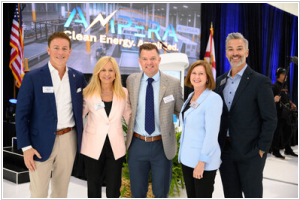
AMPERA develops next-generation subcritical thorium-based microreactor systems for AI data centers, that are energy dense and do not require refueling. Its nuclear module is designed to provide decades of reliable carbon-free power with exceptional energy density, safety, and longevity. The company also plans to process the raw thorium in-house at its facility in Florida and to use its proprietary jetting technology to manufacture high-quality Tri-structural Isotropic (TRISO) fuel kernels.
AMPERA develops next-generation subcritical thorium-based microreactor systems for AI data centers, that are energy dense and do not require refueling. Its nuclear module is designed to provide decades of reliable carbon-free power with exceptional energy density, safety, and longevity. The company also plans to process the raw thorium in-house at its facility in Florida and to use its proprietary jetting technology to manufacture high-quality Tri-structural Isotropic (TRISO) fuel kernels.
6

Country: USA | Funding: $16M
NuCube Energy is developing a high-temperature modular microreactor designed to generate electricity and industrial heat at temperatures up to 1100 degrees Celsius. Reactor is designed to provide up to 15 MW of power for 7 to 30 years before refueling, delivered via road or rail and rapidly installed on site. The reactor design contains no moving parts and, unlike many competing microreactor concepts, utilizes the generated heat for industrial heating. Currently, the company is conducting materials testing, finalizing the design configuration, and collaborating with regulatory agencies to advance to demonstration and commercial implementation.
NuCube Energy is developing a high-temperature modular microreactor designed to generate electricity and industrial heat at temperatures up to 1100 degrees Celsius. Reactor is designed to provide up to 15 MW of power for 7 to 30 years before refueling, delivered via road or rail and rapidly installed on site. The reactor design contains no moving parts and, unlike many competing microreactor concepts, utilizes the generated heat for industrial heating. Currently, the company is conducting materials testing, finalizing the design configuration, and collaborating with regulatory agencies to advance to demonstration and commercial implementation.
7

Country: India | Funding: $3M
Hylenr develops Low Energy Nuclear Reactor (LENR, aka cold fusion) that enables nuclear interactions within engineered metal lattices that operate near controlled conditions and by using accessible materials. It works by loading hydrogen isotopes into a solid metal lattice and using targeted excitation to trigger fusion reactions at manageable scales. Energy is generated via elemental transmutation - fusion and fission of host material. The reactor emits no radiation - just heat.
Hylenr develops Low Energy Nuclear Reactor (LENR, aka cold fusion) that enables nuclear interactions within engineered metal lattices that operate near controlled conditions and by using accessible materials. It works by loading hydrogen isotopes into a solid metal lattice and using targeted excitation to trigger fusion reactions at manageable scales. Energy is generated via elemental transmutation - fusion and fission of host material. The reactor emits no radiation - just heat.
8

Country: UK
Cambridge AtomWorks is focused on delivering a nuclear micro-reactor ODIN built in the UK. The startup intends to demonstrate the first nuclear micro-reactor operational prototype by 2030 and by the mid-2030s - become a trusted global supplier of clean, sustainable energy to off-grid customers. ODIN is a low-pressure, molten-salt-cooled, solid-fuel fission reactor integrated with power conversion and heat rejection systems, enabling substantial and compact, standalone electricity supply without external connections.
Cambridge AtomWorks is focused on delivering a nuclear micro-reactor ODIN built in the UK. The startup intends to demonstrate the first nuclear micro-reactor operational prototype by 2030 and by the mid-2030s - become a trusted global supplier of clean, sustainable energy to off-grid customers. ODIN is a low-pressure, molten-salt-cooled, solid-fuel fission reactor integrated with power conversion and heat rejection systems, enabling substantial and compact, standalone electricity supply without external connections.