1

Country: Italy | Funding: $5.6M
ORiS is developing technology for wirelessly transmitting power to satellites using lasers, without replacing existing equipment. The company is also building its own orbital power distribution network. Its technology is also being tested on the LOONA platform, a prototype wireless charging system for drones developed under the NATO DIANA accelerator program. ORiS reports having demonstrated wireless power transmission to a hovering drone over a distance of over 100 meters, giving the company a near-term dual-use capability and a practical testbed for the same laser power transmission capabilities it is developing for space.
ORiS is developing technology for wirelessly transmitting power to satellites using lasers, without replacing existing equipment. The company is also building its own orbital power distribution network. Its technology is also being tested on the LOONA platform, a prototype wireless charging system for drones developed under the NATO DIANA accelerator program. ORiS reports having demonstrated wireless power transmission to a hovering drone over a distance of over 100 meters, giving the company a near-term dual-use capability and a practical testbed for the same laser power transmission capabilities it is developing for space.
2
Country: Australia | Funding: $5.2M
Aquila is building wireless energy networks that use lasers to transmit power as infrared light. Its laser power-beaming system sends energy as infrared light from a ground-based transmitter to a specialised photovoltaic receiver, which captures the beam and converts it back into electricity. The broader goal is to create a wireless layer of energy infrastructure that can reach places traditional grids, cables and batteries struggle to serve, whether that is a drone in flight, a satellite in orbit or infrastructure in a remote location.
Aquila is building wireless energy networks that use lasers to transmit power as infrared light. Its laser power-beaming system sends energy as infrared light from a ground-based transmitter to a specialised photovoltaic receiver, which captures the beam and converts it back into electricity. The broader goal is to create a wireless layer of energy infrastructure that can reach places traditional grids, cables and batteries struggle to serve, whether that is a drone in flight, a satellite in orbit or infrastructure in a remote location.
3

Country: USA | Funding: $77.3M
Star Catcher is creating the first space power grid - an orbital power transmission system designed for wireless optical (laser) power transmission to satellites and spacecraft. This grid could reduce the need for larger onboard solar arrays and batteries, extend mission life, and enable more energy-intensive applications in orbit. Star Catcher's laser receivers are small and lightweight, and can be installed without major modifications to the satellite's structure. The company has already completed an in-orbit demonstration of the subsystem and, according to the company, set a world record for optical power transmission.
Star Catcher is creating the first space power grid - an orbital power transmission system designed for wireless optical (laser) power transmission to satellites and spacecraft. This grid could reduce the need for larger onboard solar arrays and batteries, extend mission life, and enable more energy-intensive applications in orbit. Star Catcher's laser receivers are small and lightweight, and can be installed without major modifications to the satellite's structure. The company has already completed an in-orbit demonstration of the subsystem and, according to the company, set a world record for optical power transmission.
4
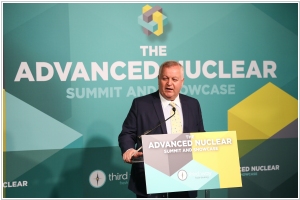
Country: USA | Funding: $1.7B
X-energy produces the Xe-100 - small modular nuclear reactor. It is a fourth-generation, 80-megawatt high-temperature gas-cooled reactor (HTGR), boasting (according to the company) high stability, efficiency, reliability and safety. The reactor can be scaled into 4-pack power plant thanks to its modular design. Its construction maximizes the use of off-the-shelf components, that can be delivered to the site using existing road and rail routes. The reactor does not rely on any active systems, electrical power or human intervention for safety, i.e. it shuts down and dissipates heat passively (as a result of the low power density). X-energy also produces TRISO-X fuel, which can withstand extreme temperatures. The company also aims to produce power systems for lunar bases.
X-energy produces the Xe-100 - small modular nuclear reactor. It is a fourth-generation, 80-megawatt high-temperature gas-cooled reactor (HTGR), boasting (according to the company) high stability, efficiency, reliability and safety. The reactor can be scaled into 4-pack power plant thanks to its modular design. Its construction maximizes the use of off-the-shelf components, that can be delivered to the site using existing road and rail routes. The reactor does not rely on any active systems, electrical power or human intervention for safety, i.e. it shuts down and dissipates heat passively (as a result of the low power density). X-energy also produces TRISO-X fuel, which can withstand extreme temperatures. The company also aims to produce power systems for lunar bases.
5

Country: USA | Funding: $596M
Antares designs and builds microfission reactors for strategic energy applications, including space missions, commercial and military energy resilience. Its R1 microreactor can produce from 100 kilowatts to 1 megawatt and uses TRISO fuel, which consists of uranium spheres coated with carbon and ceramics, embedded in graphite. It's designed to run safely and autonomously for 6+ years without refueling. The company performs high-precision machining of the nuclear graphite in-house, speeding design iterations. The optimized reactor design simplifies deployment with a minimal number of actuators. The control drums, made of graphite and boron carbide, have independent actuators, inspired by the designs of historical space reactors. Antares has a manufacturing facility in California and has already tested the first electrically heated demonstration unit (EDU).
Antares designs and builds microfission reactors for strategic energy applications, including space missions, commercial and military energy resilience. Its R1 microreactor can produce from 100 kilowatts to 1 megawatt and uses TRISO fuel, which consists of uranium spheres coated with carbon and ceramics, embedded in graphite. It's designed to run safely and autonomously for 6+ years without refueling. The company performs high-precision machining of the nuclear graphite in-house, speeding design iterations. The optimized reactor design simplifies deployment with a minimal number of actuators. The control drums, made of graphite and boron carbide, have independent actuators, inspired by the designs of historical space reactors. Antares has a manufacturing facility in California and has already tested the first electrically heated demonstration unit (EDU).
6

Country: USA | Funding: $450M
Redwire focuses on space commercialization, digitally engineered spacecraft, on-orbit service, assembly, and manufacturing.
Redwire focuses on space commercialization, digitally engineered spacecraft, on-orbit service, assembly, and manufacturing.
7

Country: USA | Funding: $249.6M
Astrobotic Technology creates first-ever commercial power service for the lunar surface. It will enable space agencies, companies, and nonprofit systems to survive the lunar night and operate indefinitely on the Moon. Delivered to the lunar surface, LunaGrid will deploy its VSAT to begin generating solar power. This power will be distributed via wireless chargers and tethered CubeRovers, bringing VSAT-generated power to surface assets. Each VSAT will include the transformers and power management systems needed to extend power capabilities beyond the VSAT itself and into a fully fledged power grid.
Astrobotic Technology creates first-ever commercial power service for the lunar surface. It will enable space agencies, companies, and nonprofit systems to survive the lunar night and operate indefinitely on the Moon. Delivered to the lunar surface, LunaGrid will deploy its VSAT to begin generating solar power. This power will be distributed via wireless chargers and tethered CubeRovers, bringing VSAT-generated power to surface assets. Each VSAT will include the transformers and power management systems needed to extend power capabilities beyond the VSAT itself and into a fully fledged power grid.
8

Country: USA | Funding: $84M
Avalanche is a fusion energy startup that, unlike its competitors, is trying to create a miniature version of the fusion reactor. Their reactor is only 9 centimeters in diameter (the new version will increase to 25 centimeters and is expected to produce around 1 megawatt). The smaller size allowes Avalanche to speed up the process. The company tests modifications to its devices "sometimes twice a week," which would be difficult and expensive with a larger device. To confine the plasma, Avalanche's reactor uses an extremely high-voltage electric current to attract plasma particles into orbit around an electrode. It also uses magnets to maintain order, although they are nowhere near as powerful as those in a tokamak. As the orbit narrows and the plasma speed increases, the particles begin to collide with each other and fuse.
Avalanche is a fusion energy startup that, unlike its competitors, is trying to create a miniature version of the fusion reactor. Their reactor is only 9 centimeters in diameter (the new version will increase to 25 centimeters and is expected to produce around 1 megawatt). The smaller size allowes Avalanche to speed up the process. The company tests modifications to its devices "sometimes twice a week," which would be difficult and expensive with a larger device. To confine the plasma, Avalanche's reactor uses an extremely high-voltage electric current to attract plasma particles into orbit around an electrode. It also uses magnets to maintain order, although they are nowhere near as powerful as those in a tokamak. As the orbit narrows and the plasma speed increases, the particles begin to collide with each other and fuse.
9

Country: USA | Funding: $50M
Aetherflux is building a constellation of small LEO satellites to beam solar energy to Earth using infrared lasers. This approach differs from traditional space-based solar power (SBSP) concepts, which rely on massive geostationary platforms transmitting power via microwaves. The US Defense Department has allocated funding for the development of this technology to ensure the energy supply to remote military bases and contested areas. Additionally, the Aetherflux satellites will have an orbital computing node that utilizes continuous solar power and radiative cooling to enable high-performance data processing in space. The node uses optical inter-satellite links and advanced relay networks to ensure continuous availability, consistent with ground-based application servers.
Aetherflux is building a constellation of small LEO satellites to beam solar energy to Earth using infrared lasers. This approach differs from traditional space-based solar power (SBSP) concepts, which rely on massive geostationary platforms transmitting power via microwaves. The US Defense Department has allocated funding for the development of this technology to ensure the energy supply to remote military bases and contested areas. Additionally, the Aetherflux satellites will have an orbital computing node that utilizes continuous solar power and radiative cooling to enable high-performance data processing in space. The node uses optical inter-satellite links and advanced relay networks to ensure continuous availability, consistent with ground-based application servers.

See also:
Top 10 Space Data Center Startups
Top 10 Space Data Center Startups
10

Country: USA | Funding: $30.1M
Solestial is aiming to fill the rising demand for solar panels that can withstand the harsh conditions in space while also providing a less costly alternative to the “extravagantly expensive” photovoltaic technology
Solestial is aiming to fill the rising demand for solar panels that can withstand the harsh conditions in space while also providing a less costly alternative to the “extravagantly expensive” photovoltaic technology
11

Country: USA | Funding: $28.7M
Reflect Orbital is building reflectors in space to shine sunlight on solar panels at night.
Reflect Orbital is building reflectors in space to shine sunlight on solar panels at night.
12

Country: USA | Funding: $18.5M
Overview Energy is developing a solar power system that can harvest solar energy from space at night. The startup plans to use large solar arrays in geosynchronous orbit to collect sunlight. It will then use infrared lasers to transmit this energy to large solar power stations on Earth. The company has already demonstrated its power transmission technology: an aircraft transmitted energy via laser to a ground receiver over a distance of 5 kilometers. Microwave beams are less sensitive to clouds and humidity than infrared lasers, which cannot transmit energy in cloudy conditions. However, since microwave systems cannot utilize existing solar power stations, Overview has to build its own ground stations. The startup plans to launch its first satellite in 2028 and begin transmitting power in 2030.
Overview Energy is developing a solar power system that can harvest solar energy from space at night. The startup plans to use large solar arrays in geosynchronous orbit to collect sunlight. It will then use infrared lasers to transmit this energy to large solar power stations on Earth. The company has already demonstrated its power transmission technology: an aircraft transmitted energy via laser to a ground receiver over a distance of 5 kilometers. Microwave beams are less sensitive to clouds and humidity than infrared lasers, which cannot transmit energy in cloudy conditions. However, since microwave systems cannot utilize existing solar power stations, Overview has to build its own ground stations. The startup plans to launch its first satellite in 2028 and begin transmitting power in 2030.
13

Country: USA | Funding: $12M
Starpath Robotics builds spacecraft propellant that reduces the deep space transport cost.
Starpath Robotics builds spacecraft propellant that reduces the deep space transport cost.
14

Country: USA | Funding: $10M
Mantis Space is energy provider for space missions and LEO satellites. It creates a constellation of spacecraft that orbit Earth, capturing solar energy and transmitting it to other spacecraft in orbit using optical systems with modern laser technology. These systems wirelessly transmit power directly to the satellites' existing solar panels. Mantis' power infrastructure eliminates the typical power shortage experienced by satellites when they enter darkness approximately every 95 minutes (a period known in the space industry as an eclipse) and extends their operational life.
Mantis Space is energy provider for space missions and LEO satellites. It creates a constellation of spacecraft that orbit Earth, capturing solar energy and transmitting it to other spacecraft in orbit using optical systems with modern laser technology. These systems wirelessly transmit power directly to the satellites' existing solar panels. Mantis' power infrastructure eliminates the typical power shortage experienced by satellites when they enter darkness approximately every 95 minutes (a period known in the space industry as an eclipse) and extends their operational life.
15

Country: New Zealand | Funding: NZ$11M
Zenno is the pioneer and global leader of superconducting magnets for space applications, revolutionizing space-movement through the untapped energy of super magnets. Zenno's hardware and software products ensure satellite missions are effectively managed, guaranteeing maximum economic returns.
Zenno is the pioneer and global leader of superconducting magnets for space applications, revolutionizing space-movement through the untapped energy of super magnets. Zenno's hardware and software products ensure satellite missions are effectively managed, guaranteeing maximum economic returns.
16

Country: USA | Funding: $4M
Arinna builds ultrathin solar panels specifically for spacecraft. Its technology is based on a new material - transition metal dichalcogenides that are atomically thin semiconductors. This technology allows for extremely flexible cells that the company claims are cheaper, more durable than legacy space solar panels and 32% more efficient. Arinna’s technology also won’t require protective coverings, will last 15 years on orbit, and can be delivered within weeks. The company expects to have its first products being tested on orbit before the end of 2026. After qualifying their photovoltaics in space, the company hopes to build a facility that can mass produce the stuff at megawatt scale in 2028.
Arinna builds ultrathin solar panels specifically for spacecraft. Its technology is based on a new material - transition metal dichalcogenides that are atomically thin semiconductors. This technology allows for extremely flexible cells that the company claims are cheaper, more durable than legacy space solar panels and 32% more efficient. Arinna’s technology also won’t require protective coverings, will last 15 years on orbit, and can be delivered within weeks. The company expects to have its first products being tested on orbit before the end of 2026. After qualifying their photovoltaics in space, the company hopes to build a facility that can mass produce the stuff at megawatt scale in 2028.
17

Country: USA | Funding: $2.3M
Above is developing technology to provide energy for on-orbit servicing, assembly and manufacturing
Above is developing technology to provide energy for on-orbit servicing, assembly and manufacturing
18

Country: Germany
Pulsar Fusion has designed the first launch-capable, high-power chemical rocket engine powered by fusion reactor. Its Dual Direct Fusion Drive is a compact design nuclear fusion engine which could provide both thrust and electrical power for spaceships. This technology opens unprecedented possibilities to explore the solar system in a limited amount of time and with a very high payload to propellant masses ratio.
Pulsar Fusion has designed the first launch-capable, high-power chemical rocket engine powered by fusion reactor. Its Dual Direct Fusion Drive is a compact design nuclear fusion engine which could provide both thrust and electrical power for spaceships. This technology opens unprecedented possibilities to explore the solar system in a limited amount of time and with a very high payload to propellant masses ratio.
19

Country: New Zealand | Funding: NZ$906.3K
Emrod uses tele-energy technology to transmit energy wirelessly over many kilometres or miles.
Emrod uses tele-energy technology to transmit energy wirelessly over many kilometres or miles.
20
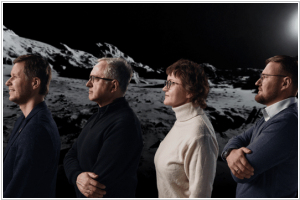
Country: Latvia | Funding: €450K
Deep Space Energy is developing a new radioactive generator technology for the European space and defense industry, which will ultimately power lunar exploration. DSE's generators use radioisotopes - materials derived from nuclear waste - to generate heat through natural decay. The solution converts this heat into electrical energy, requiring five times less radioisotope fuel than thermoelectric generators currently used in space. The generator is used to back up satellite power systems, providing backup power independent of solar energy, making it critical for important military reconnaissance assets. The work is funded by government contracts and grants from the European Space Agency, NATO's DIANA program, and the Latvian government.
Deep Space Energy is developing a new radioactive generator technology for the European space and defense industry, which will ultimately power lunar exploration. DSE's generators use radioisotopes - materials derived from nuclear waste - to generate heat through natural decay. The solution converts this heat into electrical energy, requiring five times less radioisotope fuel than thermoelectric generators currently used in space. The generator is used to back up satellite power systems, providing backup power independent of solar energy, making it critical for important military reconnaissance assets. The work is funded by government contracts and grants from the European Space Agency, NATO's DIANA program, and the Latvian government.
21

Country: USA | Funding: $250K
Virtus Solis has designed the world's first space-based solar power energy generation system. It consists of satellite arrays collect solar power and convert to microwaves that transmit solar power to the ground. Ground stations rectennas gather microwave energy and convert back to electricity. Satellites are grouped into massive arrays - 100,000 satellites for 100MW, allowing for a highly scalable energy platform. Arrays can grow to 20 Gigawatt or more. Satellites are in sunlight all of the time with long dwell time over the northern/southern hemisphere due to orbital characteristics. Microwaves pass through atmosphere and weather with nearly no loss.
Virtus Solis has designed the world's first space-based solar power energy generation system. It consists of satellite arrays collect solar power and convert to microwaves that transmit solar power to the ground. Ground stations rectennas gather microwave energy and convert back to electricity. Satellites are grouped into massive arrays - 100,000 satellites for 100MW, allowing for a highly scalable energy platform. Arrays can grow to 20 Gigawatt or more. Satellites are in sunlight all of the time with long dwell time over the northern/southern hemisphere due to orbital characteristics. Microwaves pass through atmosphere and weather with nearly no loss.
22
Country: USA
SolarSpace is developing a next-generation concentrated solar power (CSP) technology developed at the University of Arizona's Steward Observatory Mirror Laboratory. Lightweight mirror technology enabled the creation of some of the world's largest mirrors (9.2 m²) that focus sunlight. At the focal point, light enters a small power conversion unit (PCU) through a spherical lens, where it is converted into electricity by small, highly efficient multi-junction solar cells. Patented optics deliver 1,000-fold concentrated sunlight to the cells, distributing it evenly among them, resulting in extremely high overall efficiency. Multiple mirror modules are mounted on a lightweight, dual-axis tracker and aimed directly at the sun, maximizing total power output from sunrise to sunset. SolarSpace has licensed the Transmission Energy Efficiency System (TREES) from NASA and signed a Space Act Agreement with NASA.
SolarSpace is developing a next-generation concentrated solar power (CSP) technology developed at the University of Arizona's Steward Observatory Mirror Laboratory. Lightweight mirror technology enabled the creation of some of the world's largest mirrors (9.2 m²) that focus sunlight. At the focal point, light enters a small power conversion unit (PCU) through a spherical lens, where it is converted into electricity by small, highly efficient multi-junction solar cells. Patented optics deliver 1,000-fold concentrated sunlight to the cells, distributing it evenly among them, resulting in extremely high overall efficiency. Multiple mirror modules are mounted on a lightweight, dual-axis tracker and aimed directly at the sun, maximizing total power output from sunrise to sunset. SolarSpace has licensed the Transmission Energy Efficiency System (TREES) from NASA and signed a Space Act Agreement with NASA.
23

Country: Italy
SunCubes is an innovative startup which goal is to build the future space energy infrastructure through its innovative satellites' recharging system.
SunCubes is an innovative startup which goal is to build the future space energy infrastructure through its innovative satellites' recharging system.
24

Country: UK
Space Solar will develop and commercialise Space-Based Solar Power, an affordable, scalable clean energy technology. We will help the UK and partner nations transition sustainably to Net Zero, delivering energy security and improving the quality of life for people around the world.
Space Solar will develop and commercialise Space-Based Solar Power, an affordable, scalable clean energy technology. We will help the UK and partner nations transition sustainably to Net Zero, delivering energy security and improving the quality of life for people around the world.
25

Country: Netherlands
Sparkwing is our off-the-shelf solar array answer for the small satellite market. Sparkwing offers a high value for money, short lead time, easy to integrate solar array from an experienced team and a reliable supply chain.
Sparkwing is our off-the-shelf solar array answer for the small satellite market. Sparkwing offers a high value for money, short lead time, easy to integrate solar array from an experienced team and a reliable supply chain.
26

Country: Canada
Volta has built the LightGrid - an orbital architecture transferring power wirelessly to assets on the lunar surface.
Volta has built the LightGrid - an orbital architecture transferring power wirelessly to assets on the lunar surface.
27

Country: USA
City Labs mission aims to validate a tritium-powered electrical source for satellites and lunar systems that could operate where solar power falls short. It already launched the first commercial demonstration of a nuclear-powered satellite technology, testing a power source that could allow future spacecraft and autonomous sensors to operate for years without relying exclusively on solar panels or conventional batteries.
City Labs mission aims to validate a tritium-powered electrical source for satellites and lunar systems that could operate where solar power falls short. It already launched the first commercial demonstration of a nuclear-powered satellite technology, testing a power source that could allow future spacecraft and autonomous sensors to operate for years without relying exclusively on solar panels or conventional batteries.
28
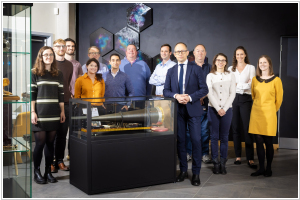
Country: UK
Perpetual Atomics is a space nuclear power technology company providing radioisotope power systems, fuel energy innovation, and recycling.
Perpetual Atomics is a space nuclear power technology company providing radioisotope power systems, fuel energy innovation, and recycling.