1

Country: Switzerland | Funding: $3M
Neology is developing a system that converts liquid ammonia into hydrogen and then into electricity using fuelcells, with water being the primary byproduct. The process involves an "ammonia cracker"- a device that splits ammonia into hydrogen and nitrogen. The hydrogen is then fed into a fuelcells to generate electricity, while nitrogen, a harmless component of air, is released. The technology is designed for applications where battery-electric solutions may be ineffective, particularly for heavier vehicles, long-term operation, or in low-temperature environments. The resulting hydrogen can also be used in a variety of other ways.
Neology is developing a system that converts liquid ammonia into hydrogen and then into electricity using fuelcells, with water being the primary byproduct. The process involves an "ammonia cracker"- a device that splits ammonia into hydrogen and nitrogen. The hydrogen is then fed into a fuelcells to generate electricity, while nitrogen, a harmless component of air, is released. The technology is designed for applications where battery-electric solutions may be ineffective, particularly for heavier vehicles, long-term operation, or in low-temperature environments. The resulting hydrogen can also be used in a variety of other ways.
2

Country: UK | Funding: $307.3M
Ceres Power develops solid oxide electrolysis cell and solid oxide fuel cell technologies for use in distributed energy systems for factories, data centers and electric vehicle charging stations. The company manufactures the entire stack - from cells (that it provides to OEM partners) to complete power systems that work on natural gas. These systems can produce up to 500 kW of power, with electrical efficiency up to 65%. According to the company, they also deliver 25% lower CO2 emissions than open-loop gas turbines and virtually zero NOx and SOx emissions. The systems are factory-transportable, withstand vibration and shock loads and are suitable for both indoor and outdoor installations.
Ceres Power develops solid oxide electrolysis cell and solid oxide fuel cell technologies for use in distributed energy systems for factories, data centers and electric vehicle charging stations. The company manufactures the entire stack - from cells (that it provides to OEM partners) to complete power systems that work on natural gas. These systems can produce up to 500 kW of power, with electrical efficiency up to 65%. According to the company, they also deliver 25% lower CO2 emissions than open-loop gas turbines and virtually zero NOx and SOx emissions. The systems are factory-transportable, withstand vibration and shock loads and are suitable for both indoor and outdoor installations.
3
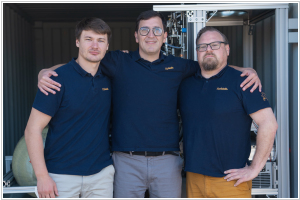
Country: USA | Funding: $2.9M
HyWatts supplies modular systems that generate energy on-site for industrial uses. It calls its system Power-Plant-in-a-Box, which integrates hydrogen storage and reversible fuel cells for, it says, zero-emission, off-grid electricity at far lower costs than battery storage.
HyWatts supplies modular systems that generate energy on-site for industrial uses. It calls its system Power-Plant-in-a-Box, which integrates hydrogen storage and reversible fuel cells for, it says, zero-emission, off-grid electricity at far lower costs than battery storage.
4

Country: USA | Funding: $4.8B
Bloom Energy creates fuel-cell systems for local power generation that can utilize a wide range of resources to generate electricity. Bloom Energy Server can use natural gas, biogas and hydrogen as fuel without combustion and is scalable to tens of megawatts. Installation and commissioning of the server can be completed in as little as three months. These servers are often used to power enterprise buildings and data centers. The company has developed proprietary solid oxide fuel cell technology that ensures low CO2 emissions. Bloom Energy also has its own hydrogen production facility at the world's largest solid oxide electrolyzer plant at NASA's Ames Research Center in Mountain View. The company syas, that this high-temperature plant produces 20-25% more hydrogen per MW than commercially demonstrated low-temperature electrolyzers.
Bloom Energy creates fuel-cell systems for local power generation that can utilize a wide range of resources to generate electricity. Bloom Energy Server can use natural gas, biogas and hydrogen as fuel without combustion and is scalable to tens of megawatts. Installation and commissioning of the server can be completed in as little as three months. These servers are often used to power enterprise buildings and data centers. The company has developed proprietary solid oxide fuel cell technology that ensures low CO2 emissions. Bloom Energy also has its own hydrogen production facility at the world's largest solid oxide electrolyzer plant at NASA's Ames Research Center in Mountain View. The company syas, that this high-temperature plant produces 20-25% more hydrogen per MW than commercially demonstrated low-temperature electrolyzers.
5

Country: USA | Funding: $468.8M
FuelCell Energy designs, manufactures, installs and operates fuel cell power systems. Its systems generate up to 2,500 kW and use natural gas or biogas as fuel. They can also operate on mixtures of natural gas and hydrogen with up to 50% hydrogen. The system's heat can be used to generate hot water, high-pressure steam or chilled water, increasing overall efficiency. The system's low emissions allow to get permission faster. The company's power systems are popular among data centers, industrial facilities, hospitals, hydrogen refueling stations, universities, utilities and wastewater treatment plants.
FuelCell Energy designs, manufactures, installs and operates fuel cell power systems. Its systems generate up to 2,500 kW and use natural gas or biogas as fuel. They can also operate on mixtures of natural gas and hydrogen with up to 50% hydrogen. The system's heat can be used to generate hot water, high-pressure steam or chilled water, increasing overall efficiency. The system's low emissions allow to get permission faster. The company's power systems are popular among data centers, industrial facilities, hospitals, hydrogen refueling stations, universities, utilities and wastewater treatment plants.
6

Country: Estonia | Funding: $145M
Elcogen manufactures solid oxide (SOC) fuel cells and complete solid oxide stack modules called elcoStack. These modules consist of a compression system, gas manifolds and air distribution structure. Solid oxide fuel cells produce electricity and heat (a byproduct) through an electrochemical process from hydrogen or hydrogen-containing fuel. Modules for one and four stacks are available. The company provides a full range of services, from design to on-site project support. Elcogen also creates solid oxide electrolytic cells that produce hydrogen through an electrochemical process from water and electricity. Their electrolysis system includes various components for steam and hydrogen distribution, thermal management, energy conversion, control and more.
Elcogen manufactures solid oxide (SOC) fuel cells and complete solid oxide stack modules called elcoStack. These modules consist of a compression system, gas manifolds and air distribution structure. Solid oxide fuel cells produce electricity and heat (a byproduct) through an electrochemical process from hydrogen or hydrogen-containing fuel. Modules for one and four stacks are available. The company provides a full range of services, from design to on-site project support. Elcogen also creates solid oxide electrolytic cells that produce hydrogen through an electrochemical process from water and electricity. Their electrolysis system includes various components for steam and hydrogen distribution, thermal management, energy conversion, control and more.
7

Country: Israel | Funding: $60.2M
GenCell develops fuel cells capable of converting hydrogen into electricity, as well as modular power plants (up to 1,680 kWh per day) that integrate on-site fuel-cell power generation and a BESS energy storage system. They are used by enterprise customers for charging electric vehicles, providing primary or backup power for critical applications and industrial equipment. The company promises rapid deployment, easy maintenance, scalability and compliance with all strict environmental regulations and standards. Using GenCell's EMS software, customers can manage energy consumption and explore both a high-level overview and deep visibility for detailed analysis of power plant operations.
GenCell develops fuel cells capable of converting hydrogen into electricity, as well as modular power plants (up to 1,680 kWh per day) that integrate on-site fuel-cell power generation and a BESS energy storage system. They are used by enterprise customers for charging electric vehicles, providing primary or backup power for critical applications and industrial equipment. The company promises rapid deployment, easy maintenance, scalability and compliance with all strict environmental regulations and standards. Using GenCell's EMS software, customers can manage energy consumption and explore both a high-level overview and deep visibility for detailed analysis of power plant operations.
8

Country: USA | Funding: $31.2M
Noon Energy is creating multi-day energy storage systems based on reversible solid oxide fuel cells. The system consists of power unit, charging tank (which converts electricity into a carbon-based storage medium, releasing oxygen into the air) and discharging tank (which extracts oxygen from the air to convert the stored energy back into electricity). The company has already demonstrated its battery operating for thousands of hours and claims that the system can operate in discharge mode for up to 200 hours at maximum power. The battery's compact design, according to the company, is 20-200 times smaller in area than other LDES technologies, citing flow batteries and pumped hydroelectric power plants as examples. Noon Energy also claims it uses only about 1% of the critical materials compared to lithium-ion batteries.
Noon Energy is creating multi-day energy storage systems based on reversible solid oxide fuel cells. The system consists of power unit, charging tank (which converts electricity into a carbon-based storage medium, releasing oxygen into the air) and discharging tank (which extracts oxygen from the air to convert the stored energy back into electricity). The company has already demonstrated its battery operating for thousands of hours and claims that the system can operate in discharge mode for up to 200 hours at maximum power. The battery's compact design, according to the company, is 20-200 times smaller in area than other LDES technologies, citing flow batteries and pumped hydroelectric power plants as examples. Noon Energy also claims it uses only about 1% of the critical materials compared to lithium-ion batteries.
9

Country: France | Funding: €19M
BeFC produces biofuel cells that replace low-power batteries in Iot electronics and wearables, making them more environmentally sustainable. These cells generate electricity using paper and enzymes - proteins that speed up chemical reactions and extract electrons from organic matter (that is used as fuel). When a drop of water lands on the paper, a reaction occurs: the enzyme "oxidizes" the glucose, generating an electric current. These cells do not use rare metals (or any metals at all). They are flexible, disposable and recyclable. The company also produces two finished products: BeFC TAG - an intelligent logistics tag for multi-factor logistics and BeFC PATCH - a smart medical patch for remote, real-time patient monitoring.
BeFC produces biofuel cells that replace low-power batteries in Iot electronics and wearables, making them more environmentally sustainable. These cells generate electricity using paper and enzymes - proteins that speed up chemical reactions and extract electrons from organic matter (that is used as fuel). When a drop of water lands on the paper, a reaction occurs: the enzyme "oxidizes" the glucose, generating an electric current. These cells do not use rare metals (or any metals at all). They are flexible, disposable and recyclable. The company also produces two finished products: BeFC TAG - an intelligent logistics tag for multi-factor logistics and BeFC PATCH - a smart medical patch for remote, real-time patient monitoring.
10

Country: Canada | Funding: $100K
Serenity Power develops Solid Oxide Fuel Cell technology. The company says, its SOFC-cells deliver 60% efficiency, zero emissions, 12x faster startup (15 minutes compared to 3 Hours with conventional SOFC), fuel flexibility (gas, hydrogen, biogas). Besides, they are 20x more compact, i.e. to get 300kW you need just one square meter (compared to 20 square meters with conventional fuel cells). The company targets oil & gas operators, data centers, remote utilities and microgrids, rental power providers, mining and industrial sites.
Serenity Power develops Solid Oxide Fuel Cell technology. The company says, its SOFC-cells deliver 60% efficiency, zero emissions, 12x faster startup (15 minutes compared to 3 Hours with conventional SOFC), fuel flexibility (gas, hydrogen, biogas). Besides, they are 20x more compact, i.e. to get 300kW you need just one square meter (compared to 20 square meters with conventional fuel cells). The company targets oil & gas operators, data centers, remote utilities and microgrids, rental power providers, mining and industrial sites.
11

Country: USA
Gemini has developed a fuel cell technology that can generate power on-site, converting gas into electricity without combustion. The company is marketing its clean tech power generator at data centers and says its systems can be deployed in months versus the years needed to upgrade a conventional power grid.
Gemini has developed a fuel cell technology that can generate power on-site, converting gas into electricity without combustion. The company is marketing its clean tech power generator at data centers and says its systems can be deployed in months versus the years needed to upgrade a conventional power grid.