1

Country: France | Funding: €33M
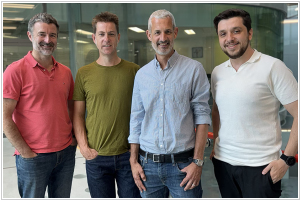
Stellaria is looking to develop an energy system based on the molten chloride fast reactor (MCFR) technology. It's a liquid-core 250 MWe reactor capable of renewing 100% of its fuel during operation, incinerating long-lived high-level waste and achieving revolutionary levels of intrinsic safety. Its low-pressure operation ensures maximum safety. Installing the reactor several metres underground provides failproof protection against earthquakes and overhead winds. Reactor power self-adapts to demand: under the effect of heat, the liquid fuel expands, slowing down the reaction. The reactor produces both electricity and heat. The startup says they developed one of the most efficient turbines on the market that reaches 45% efficiency.
Stellaria is looking to develop an energy system based on the molten chloride fast reactor (MCFR) technology. It's a liquid-core 250 MWe reactor capable of renewing 100% of its fuel during operation, incinerating long-lived high-level waste and achieving revolutionary levels of intrinsic safety. Its low-pressure operation ensures maximum safety. Installing the reactor several metres underground provides failproof protection against earthquakes and overhead winds. Reactor power self-adapts to demand: under the effect of heat, the liquid fuel expands, slowing down the reaction. The reactor produces both electricity and heat. The startup says they developed one of the most efficient turbines on the market that reaches 45% efficiency.
2

Country: Canada | Funding: $156.6M
Terrestrial Energy creates SMR based on molten salt fission technology. In its reactor (iMSR) uranium fuel is mixed with various salts, such as lithium fluoride or sodium fluoride, that serve to suspend the nuclear fuel and act as the reactor’s main coolant. The reactor core includes not only the fuel and graphite modulators that regulate the speed of the fission reactions, but also the heat exchangers and pumps that keep the salt cool and flowing. The startup is targeting a range of markets, including electric power, data centers, and industrial applications that require heat.
Terrestrial Energy creates SMR based on molten salt fission technology. In its reactor (iMSR) uranium fuel is mixed with various salts, such as lithium fluoride or sodium fluoride, that serve to suspend the nuclear fuel and act as the reactor’s main coolant. The reactor core includes not only the fuel and graphite modulators that regulate the speed of the fission reactions, but also the heat exchangers and pumps that keep the salt cool and flowing. The startup is targeting a range of markets, including electric power, data centers, and industrial applications that require heat.
3

Country: Netherlands | Funding: €42.5M
Thorizon is building a molten salt modular reactor that will use long-lived nuclear waste in combination with thorium as fue. It was founded as a spin-off from the Netherlands’ national nuclear research institute, where molten salt technology was developed quietly for decades. The reactor will use nuclear waste as fuel and provide both power and high‑temperature heat with sufficient safety. Thorizon’s patented cartridges divide the reactor core into smaller modules, unlocking the benefits of off-site series production and modular scalability. Easy to operate, move, and deploy, these cartridges make building reactors faster and more flexible than ever. The first plant construction will start in the early 2030s.
Thorizon is building a molten salt modular reactor that will use long-lived nuclear waste in combination with thorium as fue. It was founded as a spin-off from the Netherlands’ national nuclear research institute, where molten salt technology was developed quietly for decades. The reactor will use nuclear waste as fuel and provide both power and high‑temperature heat with sufficient safety. Thorizon’s patented cartridges divide the reactor core into smaller modules, unlocking the benefits of off-site series production and modular scalability. Easy to operate, move, and deploy, these cartridges make building reactors faster and more flexible than ever. The first plant construction will start in the early 2030s.
4

Country: Denmark | Funding: $33.6M
Copenhagen Atomics is developing thorium molten salt reactor technology, with a focus on low electricity prices and fast installation. Its first test reactor (planned for 2028) and first commercial reactors (planned for 2030s) will run on 5% enriched uranium as fuel salt and thorium as blanket salt. With high enriched Li7 for optimal neutron economy, CAs reactors will have better neutron economy than any other reactor ever designed or build (according to the startup). The first reactors will not be breeder reactors, meaning that they will generate more fissile fuel than they consume. But they will have breeding ratio approaching 1. In the long term CA wishes to make thorium breeder reactors in the thermal spectrum (slow neutrons). CA has also invented the Onion Core technology, enabling a compact reactor that can be mass-manufactured efficiently while requiring only a small amount of materials.
Copenhagen Atomics is developing thorium molten salt reactor technology, with a focus on low electricity prices and fast installation. Its first test reactor (planned for 2028) and first commercial reactors (planned for 2030s) will run on 5% enriched uranium as fuel salt and thorium as blanket salt. With high enriched Li7 for optimal neutron economy, CAs reactors will have better neutron economy than any other reactor ever designed or build (according to the startup). The first reactors will not be breeder reactors, meaning that they will generate more fissile fuel than they consume. But they will have breeding ratio approaching 1. In the long term CA wishes to make thorium breeder reactors in the thermal spectrum (slow neutrons). CA has also invented the Onion Core technology, enabling a compact reactor that can be mass-manufactured efficiently while requiring only a small amount of materials.
5

Country: Denmark | Funding: $28.4M
Saltfoss is developing a compact modular reactor based on molten fluoride salt (CMSR), installed on a floating power plant. This power plant will be able to produce up to 800 MW whenever and wherever needed, supporting variable renewable energy generation on windless, cloudy days. In the CMSR, fuel is mixed with molten fluoride salt, which also serves as a coolant. This provides significant safety advantages. Unlike conventional nuclear reactors, the Saltfoss reactor operates at near-atmospheric pressure, eliminating a wide range of accident scenarios. At the end of the 24-year fuel cycle, the fuel will be returned to the supplier, where the short-lived fission products are separated and stored.
Saltfoss is developing a compact modular reactor based on molten fluoride salt (CMSR), installed on a floating power plant. This power plant will be able to produce up to 800 MW whenever and wherever needed, supporting variable renewable energy generation on windless, cloudy days. In the CMSR, fuel is mixed with molten fluoride salt, which also serves as a coolant. This provides significant safety advantages. Unlike conventional nuclear reactors, the Saltfoss reactor operates at near-atmospheric pressure, eliminating a wide range of accident scenarios. At the end of the 24-year fuel cycle, the fuel will be returned to the supplier, where the short-lived fission products are separated and stored.
6
Country: USA | Funding: $5.5M
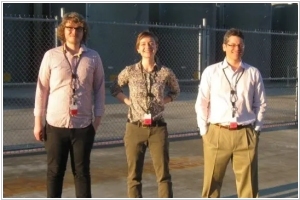
Transatomic Power is a nuclear reactor design company offering a waste-annihilating molten salt reactor. Its fueled by uranium dissolved in a liquid salt. The fuel is not surrounded by cladding, making it possible to continuously remove the fission products that would otherwise stop the nuclear reaction. Its design uses a zirconium hydride moderator, which is much more effective at slowing down neutrons than graphite. Instead of classic lithium fluoride and beryllium fluoride salt it uses lithium fluoride – uranium fluoride salt, which can hold about 27 times as much uranium. Having more uranium in the salt, coupled with having more salt in the core, enables to maintain criticality using commercially-available low-enriched uranium (5%).
Transatomic Power is a nuclear reactor design company offering a waste-annihilating molten salt reactor. Its fueled by uranium dissolved in a liquid salt. The fuel is not surrounded by cladding, making it possible to continuously remove the fission products that would otherwise stop the nuclear reaction. Its design uses a zirconium hydride moderator, which is much more effective at slowing down neutrons than graphite. Instead of classic lithium fluoride and beryllium fluoride salt it uses lithium fluoride – uranium fluoride salt, which can hold about 27 times as much uranium. Having more uranium in the salt, coupled with having more salt in the core, enables to maintain criticality using commercially-available low-enriched uranium (5%).
7

Country: India
IYNS TechSolutions develops 10 MWe / 30 MWth molten salt micro-reactor SUK‑M that runs on thorium. It is intended to use for hydrogen production, industrial heating, desalination, etc.
IYNS TechSolutions develops 10 MWe / 30 MWth molten salt micro-reactor SUK‑M that runs on thorium. It is intended to use for hydrogen production, industrial heating, desalination, etc.
8

Country: UK
Cambridge AtomWorks is focused on delivering a nuclear micro-reactor ODIN built in the UK. The startup intends to demonstrate the first nuclear micro-reactor operational prototype by 2030 and by the mid-2030s - become a trusted global supplier of clean, sustainable energy to off-grid customers. ODIN is a low-pressure, molten-salt-cooled, solid-fuel fission reactor integrated with power conversion and heat rejection systems, enabling substantial and compact, standalone electricity supply without external connections.
Cambridge AtomWorks is focused on delivering a nuclear micro-reactor ODIN built in the UK. The startup intends to demonstrate the first nuclear micro-reactor operational prototype by 2030 and by the mid-2030s - become a trusted global supplier of clean, sustainable energy to off-grid customers. ODIN is a low-pressure, molten-salt-cooled, solid-fuel fission reactor integrated with power conversion and heat rejection systems, enabling substantial and compact, standalone electricity supply without external connections.